Beyond the Badge: Can a New Generation of Police Training Actually Rebuild Trust Between Officers and Communities?
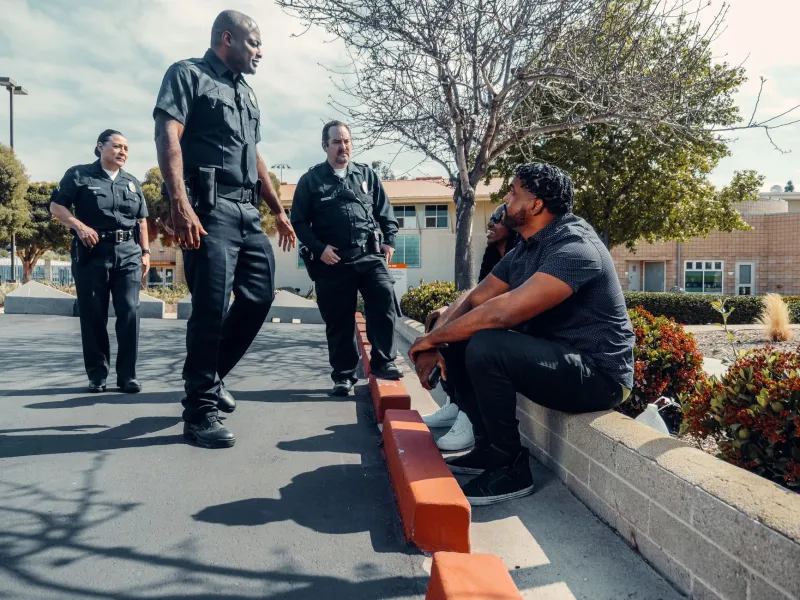
In a converted community center in Lansing, Michigan, a group of police officers sits in a circle — not a classroom, not a briefing room, but a circle — alongside social workers, community residents, and a conflict resolution facilitator from a local nonprofit. They are not role-playing a traffic stop. They are practicing something far more demanding: the art of listening without formulating a response, of acknowledging harm without becoming defensive, of sitting with discomfort rather than resolving it prematurely through authority.
This is not a sensitivity seminar. It is, according to its designers, the foundation of a different kind of policing.
The session is part of a broader initiative that the Lansing Police Department has undertaken in partnership with the Michigan Roundtable for Diversity and Inclusion, a decades-old civil rights organization that has increasingly turned its attention to law enforcement culture. It is one of dozens of similar programs emerging across the country — in cities large and small, in departments with progressive leadership and in some with decidedly traditional cultures — that are attempting to answer one of the most contested questions in American public life: Can police be trained not merely to de-escalate situations, but to fundamentally reimagine their role in community conflict?
A Crisis That Demanded More Than a Memo
The impetus for this wave of programming is well understood. The deaths of George Floyd, Breonna Taylor, and dozens of others at the hands of police officers between 2014 and 2021 catalyzed a national reckoning that placed law enforcement culture, training, and accountability under an intensity of scrutiny not seen since the civil rights era. Calls to defund, reform, reimagine, and restructure police departments produced an enormous range of policy responses — some substantive, many cosmetic.
Among the most durable responses, practitioners in the field argue, has been a renewed investment in conflict resolution and de-escalation training — not as a public relations gesture, but as a reorientation of what policing is fundamentally for.
"The old model assumed that authority was the primary tool," said Dr. Rashida Watkins, a criminologist and conflict resolution scholar at Howard University who consults with law enforcement agencies on training design. "What we're seeing in the most serious programs is a recognition that authority without relationship is fragile — and that relationship-building is itself a public safety strategy."
What Serious Training Actually Looks Like
The distinction between performative and substantive de-escalation training is significant, and practitioners are quick to draw it. A one-day workshop on communication techniques is not the same as a sustained, structurally embedded curriculum that changes how officers understand their role.
The Louisville Metro Police Department in Kentucky, working with the Crisis Intervention Team (CIT) International model, has invested in training officers not merely in verbal de-escalation techniques but in the underlying principles of trauma-informed engagement — understanding how trauma shapes behavior, how survival responses can be misread as aggression, and how an officer's own physiological state affects decision-making under stress.
Similarly, the Camden County Police Department in New Jersey — which famously dissolved and reconstituted itself in 2013 as part of a broader reform effort — has embedded community engagement as a formal performance metric alongside traditional public safety indicators. Officers are evaluated not only on response times and arrest rates, but on the quality of their relationships with community members in their assigned areas.
"We started asking different questions," said a senior training officer in Camden who has been with the department through its transformation. "Not just 'did you handle the call?' but 'do the people on that block know your name? Do they call you before things escalate?' That changes what officers prioritize."
The Civilian Partners Driving Change From Outside
What distinguishes the most effective programs from departmental self-improvement efforts is the consistent presence of civilian peacebuilding organizations as genuine partners — not consultants brought in to check a box, but organizations with ongoing relationships, independent accountability, and community credibility.
In Denver, Colorado, the STAR (Support Team Assisted Response) program has redirected thousands of low-level mental health and social service calls from armed officers to teams of paramedics and mental health clinicians. While STAR is primarily a diversion program rather than a training initiative, its success has catalyzed broader conversations within the Denver Police Department about which calls require law enforcement presence and which are better understood as conflict or crisis situations requiring a different kind of response.
In Minneapolis — a city whose relationship with law enforcement was profoundly ruptured by the murder of George Floyd — a coalition of community organizations including Pillsbury United Communities has worked with select officers on restorative justice principles, exploring how accountability frameworks developed in school and community settings might be adapted for law enforcement contexts.
These partnerships are not without friction. Several community organizations involved in similar collaborations have withdrawn when they concluded that departmental leadership was using their participation as cover without genuine commitment to structural change. That experience has made many civilian peacebuilders appropriately cautious.
"Partnership requires power-sharing," said one community facilitator in Chicago who works on police-community dialogue but declined to be named, citing ongoing negotiations with the department. "If the department controls the curriculum, controls who attends, controls how outcomes are measured — that's not partnership. That's consultation theater."
Skepticism From Both Sides
The resistance to these programs is not limited to progressive advocates concerned about co-optation. Within law enforcement itself, conflict resolution training faces a distinct set of objections — some principled, some cultural, and some rooted in legitimate operational concerns.
Many officers argue that de-escalation frameworks underestimate the speed and unpredictability of real-world encounters. "The scenarios in training are controlled," said one veteran officer in Houston who spoke on background. "On the street, you have seconds. The idea that you can apply a seven-step communication model when someone is charging at you — it doesn't reflect reality."
These concerns are taken seriously by the better-designed programs. Effective conflict resolution training does not suggest that every situation can be resolved through dialogue — it seeks to expand the range of situations in which officers have genuine options, while improving their capacity to read and respond to the ones that escalate. The goal is not to eliminate force as an option, but to ensure it is not the default.
There is also a legitimate structural critique: even the most committed individual officers cannot transform a department's relationship with a community if the broader systems of accountability, discipline, and resource allocation remain unchanged. Training, in this view, is necessary but insufficient.
The Question of Scale
For those who believe that conflict resolution principles can genuinely reshape law enforcement culture, the central challenge is replication. The programs profiled here share certain characteristics — sustained investment, genuine civilian partnership, leadership buy-in, and community accountability — that are difficult to mandate and impossible to fake. They also exist in specific local contexts, shaped by particular histories of harm and particular relationships of trust.
Whether they can be codified into a national model is an open question. The U.S. Department of Justice's Office of Community Oriented Policing Services (COPS) has documented dozens of promising practices, but the American law enforcement landscape — fragmented across more than 18,000 separate agencies, each with its own governance, culture, and accountability structures — resists top-down standardization.
What may be more achievable is the cultivation of a growing cohort of departments, civilian organizations, and trained practitioners who demonstrate, city by city, that a different relationship between police and community is not merely aspirational. It is, in the right conditions, operational.
"This work is slow," said Dr. Watkins. "It's not a program you launch — it's a culture you build. But the departments that have committed to it are seeing something real. And that matters, because we need proof that it's possible."
In a country where trust between law enforcement and communities — particularly communities of color — has been eroded over generations, proof of possibility may be the most important thing a peacebuilder can offer.