The Listening Generation: Young Americans Are Choosing Peacebuilding — and the Country Should Take Notice
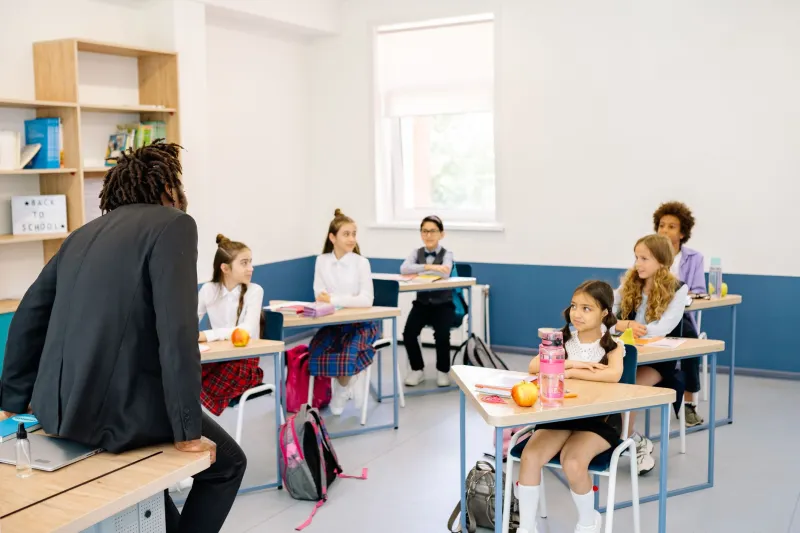
Marcus Webb was sixteen years old when a fight between two classmates at his Chicago high school escalated into a week-long cycle of retaliatory threats that left teachers frightened and students choosing sides. The school's administration responded with suspensions. The suspensions made things worse. What finally interrupted the cycle was a peer mediation session facilitated by two juniors who had completed a forty-hour conflict resolution training program the previous summer.
"I watched those two kids come out of that room actually shaking hands," Marcus recalls. "Not because someone forced them to. Because someone had actually listened to both of them. I thought: that's what I want to do."
Marcus is now 22 and completing a graduate certificate in dispute resolution at DePaul University. He volunteers twelve hours a week with a community mediation center on Chicago's South Side. He is not unusual. Across the United States, a quiet but accelerating movement is producing young people who are making a deliberate, values-driven choice to invest their energy in the hard, unglamorous work of building peace.
The Data Behind the Movement
The growth of youth mediation and conflict resolution programs in the United States over the past decade is striking. According to the National Association for Community Mediation, the number of community mediation centers offering youth-specific training programs increased by 34 percent between 2015 and 2023. The Association for Conflict Resolution reports that university-based conflict resolution programs have seen enrollment growth averaging 18 percent annually since 2019 — a period that coincides, not coincidentally, with some of the most intense social and political polarization in modern American history.
At the high school level, the picture is equally encouraging. The International Institute for Restorative Practices estimates that over 1,200 American secondary schools now operate some form of peer mediation program, up from fewer than 800 a decade ago. Research published in the Journal of School Violence found that schools with active peer mediation programs experienced a 29 percent reduction in disciplinary referrals and a 41 percent reduction in repeat conflict incidents among students who participated in mediation sessions.
These are not marginal numbers. They represent a genuine infrastructure of civic skill-building taking root in American educational institutions — one that deserves far more policy attention and public investment than it currently receives.
Profiles in Practice: Three Programs Shaping the Next Generation
The abstract case for youth peacebuilding becomes concrete when you examine the specific programs producing these outcomes.
In Oakland, California, the Youth Mediators Network has trained over 600 teenagers since its founding in 2017. The program's curriculum blends traditional negotiation theory — drawing on principled negotiation frameworks developed at Harvard — with culturally responsive practices that take seriously the specific conflict dynamics facing young people of color in under-resourced communities. Graduates of the program are placed as peer mediators in their own schools and, in some cases, in community settings beyond the school day. Several alumni have gone on to study conflict resolution formally at the university level; others have brought mediation skills into their workplaces and families.
"We're not just teaching kids to resolve fights," says program director Tanisha Okafor. "We're teaching them to understand why conflicts happen, what needs are going unmet, and how power operates in a room. That's a civic education you can't get from a textbook."
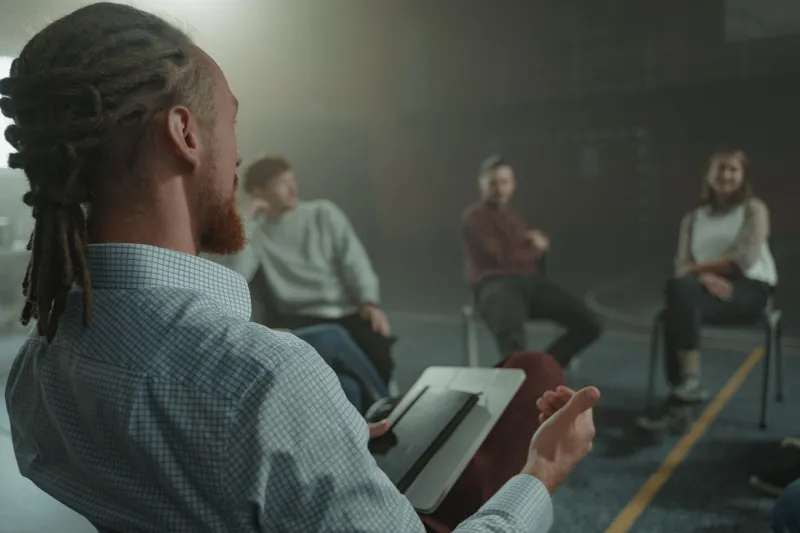
At the university level, the Conflict Resolution Student Alliance at the University of Michigan has become a model for peer-driven peacebuilding education. Founded by undergraduates in 2020 in the immediate aftermath of a deeply fractured campus climate, the Alliance now hosts monthly dialogue sessions on contested political and social topics, trains student facilitators in structured conversation techniques, and partners with the university's School of Social Work to offer a co-curricular certificate in community mediation. Membership has grown from 23 students in its founding year to over 340 active participants.
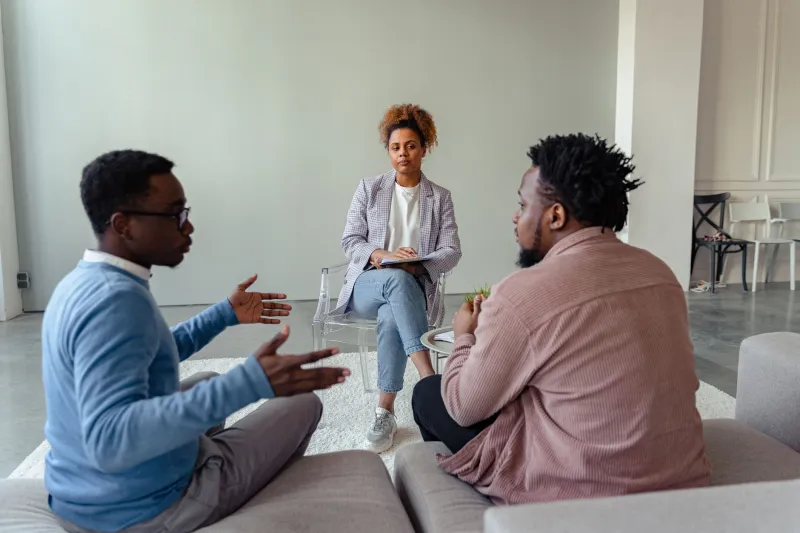
Perhaps the most structurally innovative program is BridgeBuilders, a national initiative operating in eleven cities that places trained young adult mediators — all between the ages of 18 and 24 — as conflict resolution resources in community organizations, housing authorities, and neighborhood associations. BridgeBuilders explicitly frames its work as civic infrastructure, arguing that communities need trained peacebuilders embedded in the fabric of daily life, not just available through formal institutional channels. Its 2023 impact report documented over 2,400 individual mediations facilitated by its young adult corps, with an 82 percent rate of durable agreement.
Why This Generation, Why Now
It would be tempting to attribute the rise of youth peacebuilding simply to idealism — the perennial optimism of the young, untested by the grinding realities of adult civic life. That reading is both condescending and incorrect.
The young people entering this field today have grown up entirely inside a polarized America. They have never known a political landscape that was not defined by tribal hostility, algorithmic outrage, and the exhausting spectacle of public figures who treat disagreement as an existential threat. They are not naive about conflict. They are, in many cases, more sophisticated about its dynamics than the adults who preceded them.
What distinguishes them is a refusal to accept polarization as inevitable. "Every generation gets defined by the problem it decides to take seriously," says Jasmine Torres, 23, a BridgeBuilders corps member in Phoenix. "Our generation grew up watching adults fail at this. We're choosing not to fail the same way."
This orientation is supported by research on generational values. The Harvard Kennedy School's Institute of Politics has documented, across multiple annual surveys, that Americans under 30 express significantly higher levels of interest in civic problem-solving and community engagement than popular narratives about youth disengagement would suggest. What young people are disengaged from, the data indicates, is performative partisan politics. What they are drawn toward is tangible, relational, community-level impact — precisely the terrain on which peacebuilding operates.
The Policy Gap: Investment Has Not Kept Pace with Promise
For all the genuine progress these programs represent, the field of youth conflict resolution remains chronically underfunded and institutionally fragile. Most programs operate on annual budgets under $500,000, dependent on foundation grants that rarely extend beyond three years. School-based peer mediation programs are among the first casualties of budget cuts, despite their documented effectiveness. University conflict resolution programs struggle for institutional legitimacy against more established disciplines.
The policy implications are straightforward, even if the political will to act on them is not. Federal and state education budgets should establish dedicated funding streams for school-based mediation programs, with particular priority given to under-resourced districts where conflict and its consequences are most acute. University systems should create formal pathways — course credit, co-curricular recognition, graduate funding — that make conflict resolution training accessible to students across all disciplines, not only those already drawn to the field.
Most fundamentally, policymakers need to begin treating youth peacebuilding infrastructure the way they treat other forms of civic investment: as a public good with measurable returns, not a charitable nicety to be funded when budgets allow.
The Long Game
Marcus Webb, back in Chicago, is not waiting for policy to catch up with his conviction. He mediates. He trains. He brings the skills he has acquired into every room he enters. He is twenty-two years old and already, in the most practical sense, building the country he wants to live in.
There are thousands of young Americans making the same choice. The question is not whether they are capable of transforming America's civic culture. The evidence strongly suggests they are. The question is whether the institutions that shape education, allocate public resources, and set policy priorities will recognize what is already growing — and choose to invest in it before it is lost to neglect.