Sacred Ground: How America's Faith Communities Are Becoming Unexpected Architects of Civil Peace
Sacred Ground: How America's Faith Communities Are Becoming Unexpected Architects of Civil Peace
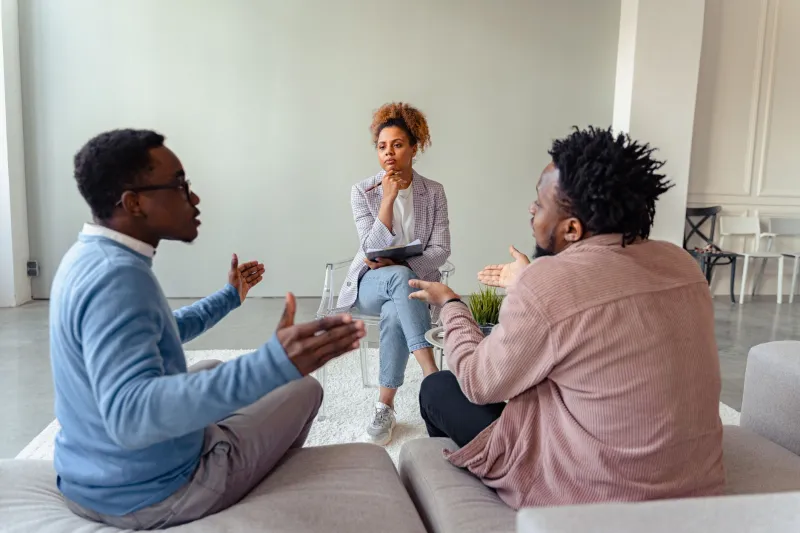
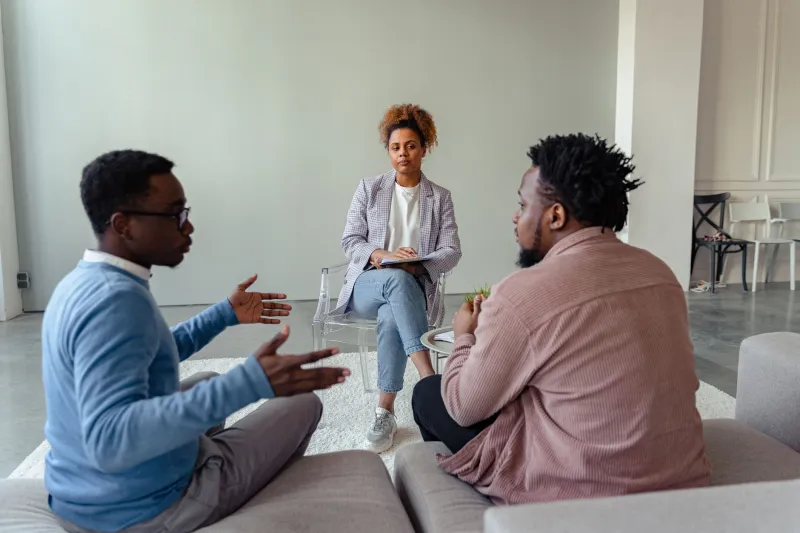
When a zoning fight over a proposed homeless shelter threatened to fracture a mid-sized Ohio city along lines of class, race, and political identity last year, the mediators who ultimately brought the warring factions to the table were not city officials, professional arbitrators, or nonprofit administrators. They were a Baptist pastor, a Reform rabbi, and a Muslim community organizer — three people whose congregations had spent the previous decade building a quiet, deliberate infrastructure of trust.
Their success was not a miracle. It was the result of years of intentional relationship-building, shared meals, and a theological conviction that their respective traditions demanded something harder than righteous opposition: genuine dialogue.
This story is playing out with increasing frequency across the United States. At a moment when faith communities are frequently cast as combatants in the nation's culture wars — and sometimes rightfully so — a less visible but potentially more consequential movement is emerging. Interfaith coalitions are stepping into the most charged local disputes in American civic life, deploying spiritual frameworks and practical mediation tools to produce agreements that conventional politics has been unable to generate.
The Culture War Narrative Misses the Whole Picture
The dominant media portrayal of religion in American public life tends to focus on conflict: school board members invoking Scripture to oppose curriculum changes, congregations mobilizing against LGBTQ+ inclusive policies, or faith leaders amplifying partisan grievances from the pulpit. That portrayal is not entirely inaccurate. But it is profoundly incomplete.
For every congregation that has become a base of operations for political combat, there are others quietly doing the unglamorous work of civic repair. The difference, many practitioners argue, lies not in theology but in orientation — whether a community understands its spiritual mandate as one of conquest or of covenant.
"We believe every person carries an irreducible dignity," says the Reverend Denise Holcomb of Covenant Community Church in Columbus, Ohio, one of the three faith leaders involved in the homeless shelter mediation. "That belief doesn't let us write off the neighbors who showed up to oppose the shelter. It requires us to sit with them long enough to understand what they were actually afraid of."
What opponents feared, it turned out, was not the homeless individuals themselves, but a perceived lack of accountability, inadequate communication from city planners, and anxieties about property values and neighborhood safety that had never been named plainly in the public hearings. Once those concerns were articulated in a structured dialogue setting — rather than shouted across a zoning board meeting — the path toward a conditional agreement became visible.
Faithful Mediation in Practice: Three Models Worth Studying
The Columbus coalition is not an isolated example. Across the country, interfaith groups are developing replicable models for community peacebuilding that deserve far greater attention from policymakers and civic leaders.
In Dearborn, Michigan, the Arab-American and Jewish communities have long occupied a complicated shared geography. The Dearborn Interfaith Council, which includes representatives from Shi'a Muslim, Sunni Muslim, Jewish, and Catholic congregations, has spent the past five years training lay members in facilitated dialogue techniques drawn from the Harvard Negotiation Project's interest-based bargaining framework. When school board tensions erupted in 2023 over library book policies, the council convened a series of community listening sessions that drew over 400 residents. The sessions did not resolve every disagreement — they were not designed to — but they measurably reduced the temperature of public discourse and produced a shared statement of community values that the school board ultimately incorporated into its decision-making process.
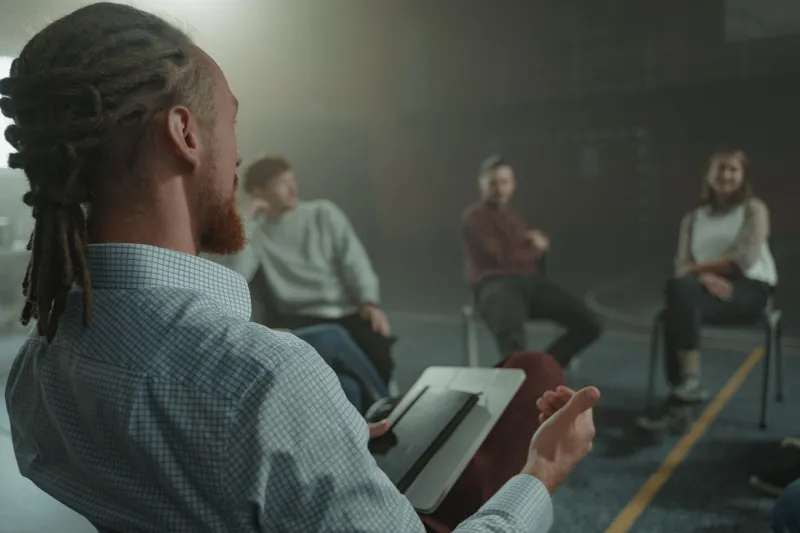
In Atlanta, a coalition called FaithBridge ATL has taken a different approach, embedding trained mediators directly into neighborhood associations in four of the city's most racially and economically diverse districts. The mediators — all of them volunteers from member congregations — receive forty hours of formal conflict resolution training each year, supplemented by monthly case consultation sessions. FaithBridge's model is explicitly non-sectarian in its methodology while remaining openly rooted in a shared spiritual ethic of human dignity. Since its founding in 2019, the coalition reports facilitating over 180 neighbor-to-neighbor mediations, with a resolution rate exceeding 70 percent.
Perhaps the most structurally ambitious example is the Interfaith Civic Table in Minneapolis, which emerged directly from the trauma of the city's post-2020 political ruptures. The Table convenes representatives from twelve faith traditions on a quarterly basis to identify emerging community tensions before they escalate into public conflict. It functions, in effect, as an early-warning and early-response system for civic discord — a model that has attracted interest from city planners in three other major American cities.
The Spiritual Frameworks That Make Dialogue Possible
What distinguishes faith-based mediation from secular conflict resolution is not merely the institutional setting. It is the underlying anthropology — the set of assumptions about human nature, human worth, and human possibility that practitioners bring to the table.
Many interfaith mediators draw on what theologians call a "covenantal" framework: the idea that communities are bound to one another not by contract or convenience but by a deeper obligation that precedes and survives disagreement. This framework creates a different kind of accountability than adversarial processes typically produce. Participants are not simply negotiating interests; they are being asked to acknowledge their shared stake in the community's health.
"In our tradition, we talk about 'teshuvah' — the possibility of return, of repair," explains Rabbi Miriam Goldstein of Temple Beth Shalom in Dearborn, a founding member of the Interfaith Council. "That concept is incredibly powerful in a mediation context. It tells people that the relationship is not over, that there is always a path back toward one another."
Islamic traditions of 'islah — reconciliation between estranged parties — and Christian concepts of restorative justice offer parallel frameworks. What they share is a refusal to treat conflict as the final word on human community.
A Vastly Underutilized Resource
Despite these examples, interfaith peacebuilding remains dramatically underresourced relative to its demonstrated potential. Most coalitions operate on shoestring budgets, relying almost entirely on volunteer labor and small congregational contributions. Few municipal governments have formal partnerships with interfaith mediation networks, even in cities where such networks have proven track records.
The reasons for this gap are partly structural — government agencies are often cautious about formal partnerships with religious organizations for constitutional reasons — and partly cultural. In an era when faith communities are so frequently associated with political polarization, it requires a deliberate act of imagination to perceive them as peacebuilding assets.
That act of imagination is precisely what America's civic moment demands. The country is not short of conflict. It is short of trusted institutions with the relational depth, the moral authority, and the practical tools to transform that conflict into something generative.
Faith communities, at their best, possess all three. The question is whether the rest of civil society is paying close enough attention to learn from them.