Common Ground, Uncommon Courage: Five American Cities Rewriting the Rules of Community
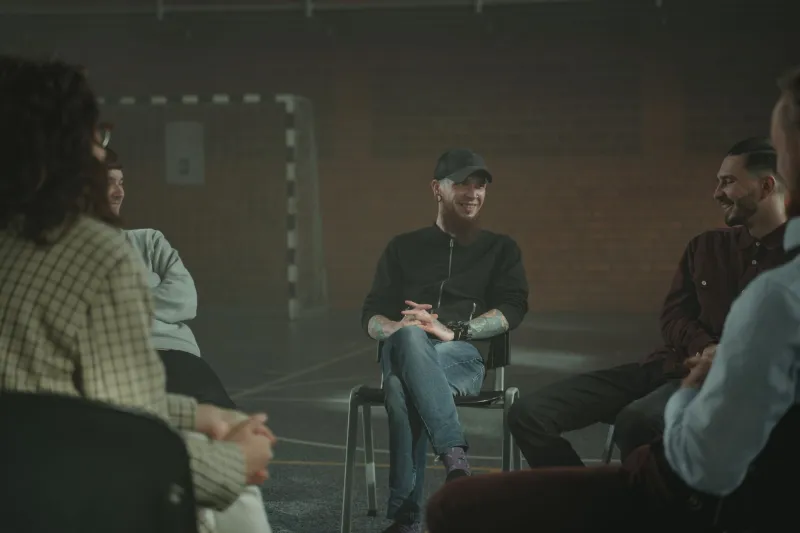
The narrative of American division has become almost inescapable. Cable news cycles, social media algorithms, and political campaigns are all structured, in some measure, around amplifying the fault lines between us. Yet something quietly remarkable is happening in cities and towns across this country. Residents — often without fanfare, and sometimes without institutional support — are choosing to sit across the table from those they once considered adversaries. They are building something fragile and vital: trust.
At People Building Peace, we believe that transformation is not the exclusive province of national summits or international treaties. It begins at the neighborhood level, in community centers and school gyms, in circles of strangers willing to listen. The five cities profiled below demonstrate that peacebuilding is not an abstraction. It is a practice, and it works.
1. Charlottesville, Virginia: Healing a Wound in Plain Sight
Few American cities carry a heavier symbolic burden than Charlottesville. The 2017 Unite the Right rally left scars that no municipal ordinance could fully address. But in the years since, a coalition of faith leaders, city officials, and grassroots organizers launched the Charlottesville Dialogue Project, a structured series of restorative justice circles designed to bring together residents across racial and political lines.
Drawing on the principles of restorative practice — where participants speak to impact rather than intent, and where listening is treated as a discipline — the circles initially focused on survivors of the 2017 violence. They gradually expanded to include broader community members grappling with ongoing tensions around Confederate monuments, policing, and housing equity.
Measurable outcomes have been striking. A 2022 independent evaluation found that participants reported a 67 percent increase in their willingness to engage in future cross-racial dialogue. Local police-community relations boards saw a 40 percent increase in civilian participation in the two years following the program's expansion. Charlottesville's story is not one of resolution so much as ongoing reckoning — and that honesty is precisely what makes its model worth studying.
2. Lansing, Michigan: Cross-Partisan Town Halls in the Heart of the Rust Belt
Lansing sits at an uncomfortable intersection of identities: a state capital in a purple state, surrounded by economically distressed communities that have shifted dramatically in their political allegiances over the past decade. When local civic organization Mid-Michigan Talks launched its cross-partisan town hall series in 2019, organizers braced for confrontation.
What they got instead was complexity. The format — modeled loosely on deliberative polling techniques pioneered by Stanford's James Fishkin — brought together registered Democrats and Republicans in facilitated small groups to discuss shared concerns around jobs, public safety, and infrastructure before introducing areas of ideological disagreement.
The results disrupted easy assumptions. Participants consistently reported that shared economic anxiety created unexpected common ground. Eighty-two percent of attendees said they left with a more nuanced view of their political counterparts. More concretely, the town halls directly informed a bipartisan city council resolution on broadband access that passed unanimously — a rarity in any American legislative body in recent years.
The Mid-Michigan Talks model has since been adopted by three neighboring counties, suggesting that replication is not only possible but organic when communities feel genuine ownership of the process.
3. Fresno, California: Interfaith Dialogue as an Antidote to Racialized Fear
Fresno is one of the most ethnically and religiously diverse cities in the American West, yet for decades that diversity coexisted with profound mutual suspicion — particularly between its large Southeast Asian, Latino, and Black communities, and between Christian, Muslim, Sikh, and Buddhist faith communities.
The Fresno Interfaith Peacebuilding Initiative, launched in partnership with California State University, Fresno, brought religious leaders and their congregations into sustained, structured dialogue. Critically, the program did not stop at theological exchange. It embedded community action projects — joint food drives, shared neighborhood clean-ups, co-hosted cultural festivals — that required ongoing collaboration rather than one-time conversation.
Researchers tracking the initiative found a 35 percent reduction in reported inter-community incidents in participating neighborhoods over a three-year period. More qualitatively, local law enforcement noted a significant increase in cross-community tip-sharing and cooperative problem-solving around neighborhood safety concerns. Fresno's experience affirms what peacebuilding scholars have long argued: sustained relationship-building, not episodic events, is what shifts the underlying architecture of community trust.
4. Tulsa, Oklahoma: Confronting a Violent History to Build a Functional Present
Tulsa's 1921 Race Massacre — one of the most devastating acts of racial violence in American history — went largely unacknowledged for generations. When the city formally began its centennial reckoning in 2021, it did so not merely through commemoration but through a structured peacebuilding process that engaged descendants of survivors, city officials, and residents with no direct historical connection to the events.
The 1921 Tulsa Race Massacre Reconciliation Initiative employed a hybrid model: community listening sessions informed by truth and reconciliation frameworks used in post-apartheid South Africa and post-conflict Colombia, adapted deliberately for the American context. Facilitators trained in trauma-informed dialogue led sessions across the city's most politically and racially divided neighborhoods.
The initiative's most significant outcome may be its effect on civic participation. Voter registration in historically underrepresented North Tulsa neighborhoods increased by 28 percent in the two years following the program's launch. Community members who participated in listening sessions were three times more likely to attend subsequent city council meetings than non-participants. Tulsa demonstrates that confronting historical injustice, rather than suppressing it, can be a generative force for democratic engagement.
5. Burlington, Vermont: Small City, Scalable Model
Burlington may seem an unlikely entry on a list concerned with bridging deep division — Vermont's largest city is, after all, among the most politically progressive in the country. But Burlington's peacebuilding challenge is instructive precisely because it defies the red-versus-blue frame. The city's divisions are internal: between its longtime working-class residents and an influx of younger, wealthier newcomers; between its established communities of color and a progressive political class that often speaks about equity without delivering it.
The Burlington Community Dialogue Network, launched by a coalition of neighborhood associations and the University of Vermont's Peace and Justice Studies program, addressed these intra-progressive tensions through peer-facilitated neighborhood councils. Trained community members — not professional mediators — led monthly conversations on housing, policing, and resource allocation.
The peer facilitation model proved transformative. Participants developed mediation skills that extended beyond formal sessions into everyday civic life. The network has since trained over 400 community facilitators, and its curriculum has been adapted by cities in Maine, New Hampshire, and upstate New York. Burlington's lesson: peacebuilding capacity, once seeded in a community, grows outward.
What These Cities Share — And What the Rest of Us Can Learn
Across these five communities, certain patterns emerge with consistency. Successful peacebuilding programs share a commitment to sustained engagement over episodic programming, a willingness to acknowledge historical harm without weaponizing it, and a structural investment in training community members rather than relying exclusively on outside experts.
None of these cities has "solved" its divisions. That framing misunderstands what peacebuilding is. These communities have, instead, built the relational infrastructure to navigate disagreement without descending into dehumanization — and that, in the current American moment, is a profound achievement.
The tools exist. The evidence is accumulating. What remains is the collective will to apply them — not just in the cities profiled here, but in every community willing to choose neighbors over rivals.