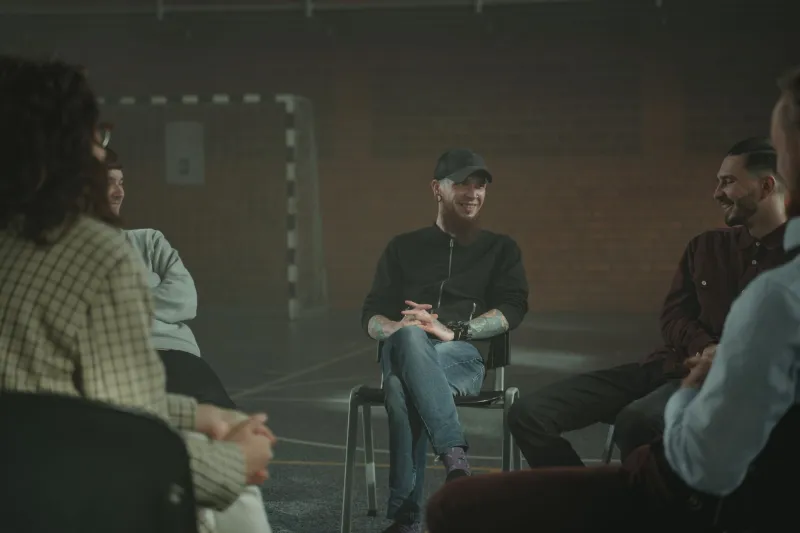
Democracy Starts in Room 12B: The Case for Making Peacebuilding a Core School Subject
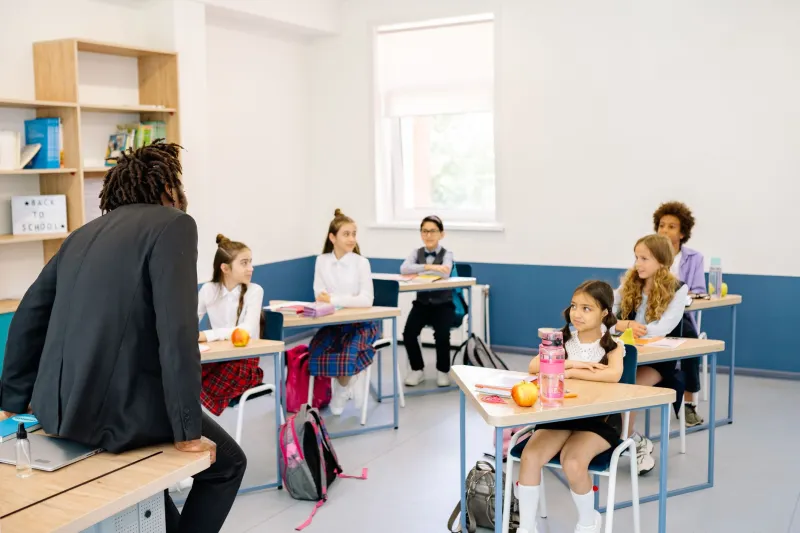
Consider what we ask of American democracy. We ask citizens to hold competing values in productive tension, to engage persuasively with those who hold fundamentally different worldviews, to accept electoral outcomes they find painful, and to sustain good-faith participation in institutions they may deeply distrust. These are extraordinary capacities. And we are preparing young people for them with almost nothing.
This is not hyperbole. It is a structural observation. Across the United States, K-12 curricula mandate instruction in mathematics, language arts, and increasingly, STEM disciplines. Yet the skills required for civic coexistence — empathic listening, principled negotiation, the capacity to de-escalate rather than inflame — receive, at best, informal and inconsistent attention. At worst, they receive none at all.
The consequences of this omission are not theoretical. They are visible in school hallways where conflicts escalate to suspension and arrest. They are audible in town halls where neighbors can no longer sustain productive disagreement. They are measurable in polling data showing that record numbers of Americans view political opponents not as fellow citizens but as existential threats. We have built a democracy whose citizens are structurally unprepared to sustain it.
The Evidence We Already Have
Before making the case for what should be done, it is worth acknowledging what has already been demonstrated. The evidence base for conflict resolution education is, by educational research standards, robust — and largely ignored by the policymakers who could act on it.
Peer mediation programs, which train students to facilitate disputes among their classmates, have been studied extensively since their emergence in the 1980s. A landmark meta-analysis published in the Journal of School Psychology reviewed over 100 studies and found that students who participated in peer mediation programs demonstrated significant improvements in conflict management skills, reductions in aggressive behavior, and increased academic engagement. These are not marginal gains. They are the kind of outcomes that justify federal investment.
Social-emotional learning — the broader framework under which conflict resolution education often sits — has an equally compelling record. Research synthesized by the Collaborative for Academic, Social, and Emotional Learning (CASEL) found that students in quality SEL programs showed an 11 percentile-point gain in academic achievement compared to control groups, alongside meaningful reductions in conduct problems and emotional distress. The notion that peacebuilding skills come at the expense of academic rigor is simply not supported by the data.
Programs like the Resolving Conflict Creatively Program (RCCP) in New York City schools and PeaceBuilders in elementary schools across the Southwest have demonstrated that when conflict resolution is embedded systematically — not offered as a one-time assembly or an elective afterthought — it reshapes school culture in durable ways. Teachers report feeling safer. Students report feeling heard. Disciplinary referrals decline. These are not coincidences.
What We Mean When We Say "Conflict Resolution Education"
It is important to be precise about what we are advocating, because the term risks being misunderstood — or, more dangerously, co-opted into something toothless.
Conflict resolution education, as we understand it at People Building Peace, is not a program that teaches children to suppress disagreement or defer to authority in the name of harmony. That would be antithetical to democratic values. Authentic peacebuilding education teaches students to engage conflict rather than avoid it — to understand the difference between positions and underlying interests, to practice active listening as a discipline rather than a passive gesture, and to develop the emotional regulation necessary to remain present in difficult conversations.
At more advanced levels, it encompasses restorative practices — approaches rooted in Indigenous and community-based traditions that ask not "what rule was broken and what punishment is warranted?" but rather "who was harmed, what do they need, and how do we repair this together?" Schools that have adopted restorative discipline models have seen dramatic reductions in suspensions and expulsions, outcomes that carry particular significance given the disproportionate impact of exclusionary discipline on Black and Latino students.
Conflict resolution education also means teaching the history of nonviolent social movements — not as triumphalist narrative but as a rigorous examination of strategy, sacrifice, and the mechanics of how ordinary people have, throughout American history, changed entrenched systems through organized, principled action. This is civic education with teeth.
The Political Obstacle — and Why It Must Be Named
Any honest discussion of this issue must confront the political resistance that has consistently blocked the scaling of conflict resolution and social-emotional learning programs in American schools. That resistance comes from multiple directions, and it deserves examination rather than dismissal.
From the right, SEL programs have increasingly been characterized as vehicles for ideological indoctrination — a concern that has intensified in the post-2020 culture war environment. Some of this criticism is made in bad faith. But some of it reflects a legitimate anxiety about the difference between teaching children how to navigate disagreement and teaching them what to conclude. Advocates of conflict resolution education must be willing to draw that distinction clearly and defend it rigorously.
From within progressive circles, a different critique sometimes emerges: that teaching conflict resolution without addressing the structural conditions that produce conflict is, at best, insufficient and, at worst, a mechanism for pacifying communities that have legitimate grievances. This critique also deserves serious engagement. Peacebuilding education is not a substitute for racial justice, economic equity, or institutional reform. It is a complement to those struggles — one that equips young people to participate in them more effectively.
The federal government's role is also contested terrain. Education in the United States is constitutionally a state and local matter, and any federal advocacy for conflict resolution standards must be pursued with full awareness of that reality. The most viable pathway is likely through federal funding incentives — not mandates — that encourage states and districts to adopt evidence-based frameworks, much as the Every Student Succeeds Act (ESSA) created space for SEL metrics within its accountability structures.
A Generation at the Crossroads
The students currently moving through American K-12 schools will be the citizens responsible for governing this country through what may be its most consequential decades. They will inherit a democracy stressed by polarization, a planet stressed by climate disruption, and communities stressed by economic precarity. The question of whether they will be equipped to navigate those challenges together — rather than in opposition to one another — is not academic.
We are not naive about the limits of education as a lever for social change. Schools cannot compensate entirely for what children absorb from polarized media environments, divided households, and economically stratified communities. But schools are one of the last remaining institutions where young Americans from different backgrounds are brought into sustained proximity with one another. That proximity is a resource. We are squandering it.
At People Building Peace, we call on federal legislators, state education commissioners, school board members, and community advocates to take the following steps: expand funding for evidence-based conflict resolution and SEL programs through ESSA and future education legislation; establish voluntary national standards for peacebuilding competencies at each grade level; invest in teacher training that equips educators to facilitate difficult conversations rather than suppress them; and elevate peer mediation and restorative practices as alternatives to exclusionary discipline nationwide.
Democracy is not a machine that runs itself. It is a practice, and like all practices, it must be taught. Room 12B — and every classroom in this country — is where that teaching either happens or fails to happen. The choice, as always, is ours to make.