Neighbors First: The Quiet Peacemakers Healing America's Most Divided Communities
Neighbors First: The Quiet Peacemakers Healing America's Most Divided Communities
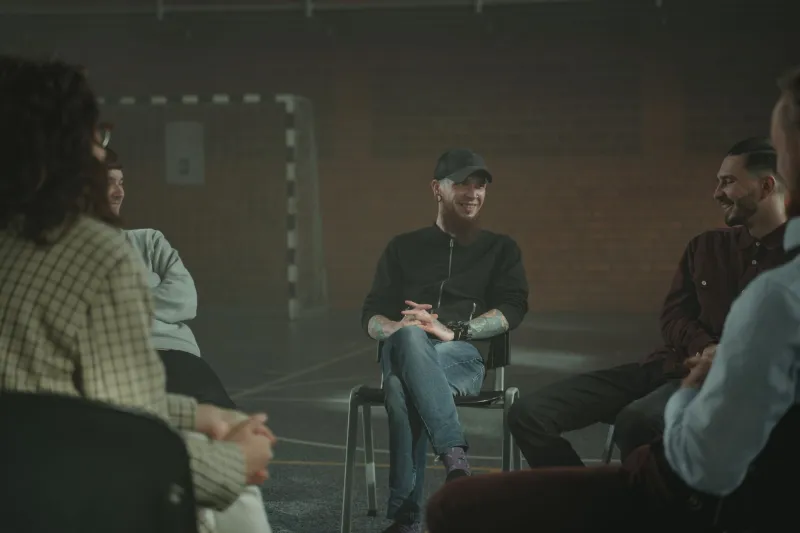
In a small conference room above a hardware store in rural Ohio, seven people who have not spoken civilly to one another in nearly three years sit in a loose circle. Two are members of the same township zoning board. Three are neighbors whose property dispute escalated into competing social media campaigns. And two are siblings who stopped sharing holiday meals after the 2020 election. None of them arrived willingly. All of them, by the session's end, will leave with something they did not expect: a reason to try again.
The person guiding that process is not a politician, a therapist, or a nationally recognized public intellectual. She is a certified community mediator named Darlene Hutchins, a former schoolteacher who retrained in conflict resolution through a regional nonprofit and now volunteers her skills across three counties. She charges nothing. She asks for nothing in return except a willingness to sit still and listen.
"People think conflict resolution is about getting everyone to agree," Hutchins says. "It isn't. It's about helping people hear each other clearly enough that they can decide what to do next without destroying the relationship entirely."
The Fracture Lines Running Through Everyday Life
America's political polarization is not an abstraction confined to cable news panels or congressional floor speeches. It lives in the silences at Thanksgiving tables, in the passive-aggressive notes left between neighbors, in the school board meetings that now require police presence. A 2022 survey by the Public Agenda Foundation found that more than half of Americans reported avoiding conversations with someone they once considered a friend due to political differences. In rural and small-town communities — where social networks are tight and avoidance is harder to sustain — that friction becomes particularly acute.
Yet it is precisely in these communities where some of the most innovative peacebuilding work in the country is quietly taking root. Far from the spotlight of national advocacy campaigns, a distributed network of trained mediators, restorative justice practitioners, and dialogue facilitators is achieving the kind of durable, human-scale breakthroughs that top-down political initiatives rarely manage.
The Tools of the Trade
The techniques these practitioners employ are drawn from decades of research in conflict transformation, and they differ meaningfully from what most people imagine when they hear the word "mediation."
Restorative circles, adapted from indigenous peacemaking traditions and widely used in school and criminal justice settings, bring affected parties together not to adjudicate blame but to surface the harm caused, the needs unmet, and the obligations each person is willing to accept going forward. In Fayetteville, Arkansas, a community mediator named Marcus Webb has used restorative circles to address tensions between longtime white residents and newly arrived Latino families in a rapidly changing neighborhood. "The circle format takes the adversarial dynamic off the table," Webb explains. "You're not presenting your case. You're telling your story. That changes everything."
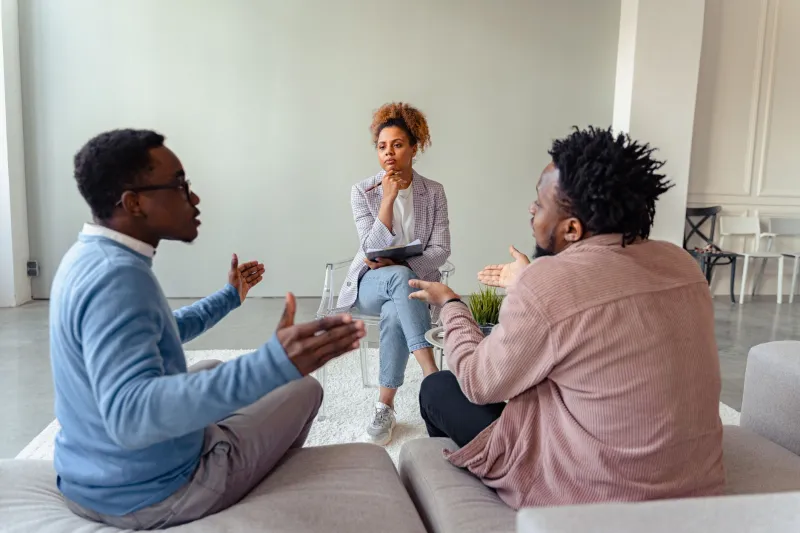
Narrative mediation, developed by New Zealand scholars John Winslade and Gerald Monk, operates on the premise that conflict is sustained by a dominant story — one that positions the other party as the villain and oneself as the victim. Practitioners trained in this approach work to help each party examine the assumptions embedded in their narrative and, gradually, to recognize the humanity in the story the other side is telling. A mediator in rural Minnesota who asked not to be named described using this technique with two farming families locked in a years-long dispute over water rights that had metastasized into personal animosity. "Once they stopped defending their stories and started examining them, they found they were actually scared of the same things," she said.
Interest-based negotiation, the framework popularized by the Harvard Negotiation Project, moves participants away from fixed positions — "I want X" — toward the underlying interests that drive those positions — "I want X because I need Y." In practice, this often reveals that parties who appear diametrically opposed actually share fundamental concerns. A city council in western Pennsylvania, paralyzed for eighteen months by a dispute over a proposed housing development, reached a workable compromise only after a trained facilitator helped members articulate what they genuinely feared, rather than what they formally opposed.
Why This Works When Politics Doesn't
The common thread running through each of these approaches is a commitment to the relational dimension of conflict — the acknowledgment that disputes between people are never purely transactional. Political processes, by contrast, are designed to produce winners and losers. Legislation passes or fails. Candidates win or lose. The zero-sum structure of electoral democracy offers little room for the kind of mutual recognition that sustainable peace requires.
Grassroots mediators operate in the space that formal politics cannot reach. They work with the particular people in the particular community, attending to the specific history, grievances, and unmet needs that no piece of legislation can fully address. And because they are embedded in their communities — not parachuted in from a national organization — they carry a credibility that outside experts rarely command.
"I grew up two miles from where I do this work," says Hutchins. "People know me. They know I'm not here to make them look stupid or to push an agenda. That matters more than any credential I could put on a business card."
Building the Infrastructure for Peace
Despite their impact, these practitioners operate largely without institutional support. Most community mediation centers in the United States are chronically underfunded, relying on a combination of small government grants, philanthropic donations, and volunteer labor. The National Association for Community Mediation estimates that hundreds of mediation centers have closed over the past two decades due to funding shortfalls, even as demand for their services has grown.
The gap between what community peacebuilders are achieving and the resources available to them represents one of the most consequential failures of civic investment in contemporary America. The work being done in that Ohio conference room, in Marcus Webb's restorative circles in Arkansas, in the farm fields of Minnesota — all of it depends on the commitment of individuals who have chosen, often at personal cost, to do what their communities need and their governments have declined to fund.
That choice deserves recognition. More urgently, it deserves support.
The architecture of a more peaceful society will not be built in Washington. It will be built in community centers and church basements and rented conference rooms, by people like Darlene Hutchins who believe, with considerable evidence on their side, that the person sitting across the circle is worth the effort of genuine understanding. The question is whether the rest of us are prepared to invest in the infrastructure that makes that belief possible.