Healing at Home: How Family Mediators Are Transforming America's Most Personal Conflicts
Healing at Home: How Family Mediators Are Transforming America's Most Personal Conflicts
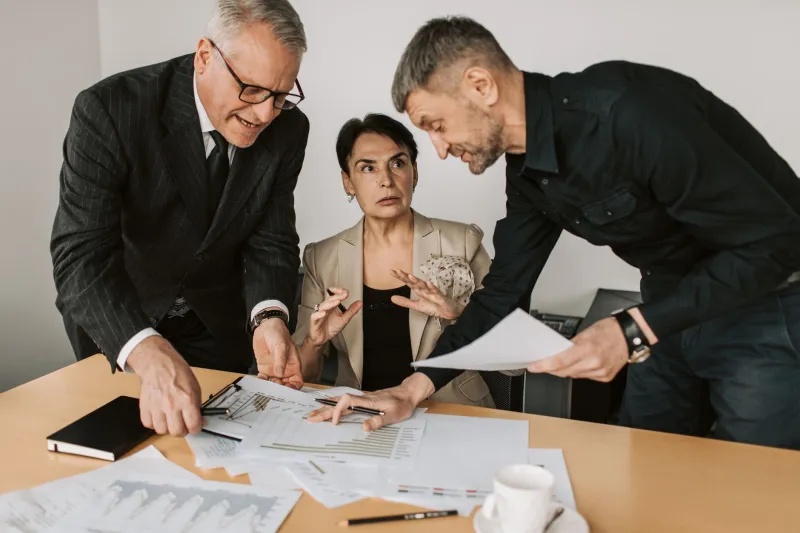
When Sandra Okafor and her husband decided to end their twelve-year marriage, she braced for what she had heard so many times before: months of depositions, competing attorneys, and a courtroom drama that would leave their two children sitting in the wreckage. Instead, a colleague suggested she look into family mediation. Six sessions later, she and her former husband had crafted a parenting plan, divided their assets, and — remarkably — preserved enough goodwill to attend their daughter's school play together the following spring.
"I kept waiting for it to become a war," Okafor recalled. "It never did."
Her experience is no longer exceptional. Across the country, a growing network of trained family mediators is quietly reshaping how Americans navigate the most emotionally charged disputes of their lives. And for those who study conflict resolution on a broader scale, the implications extend well beyond the family home.
The Anatomy of a Different Kind of Resolution
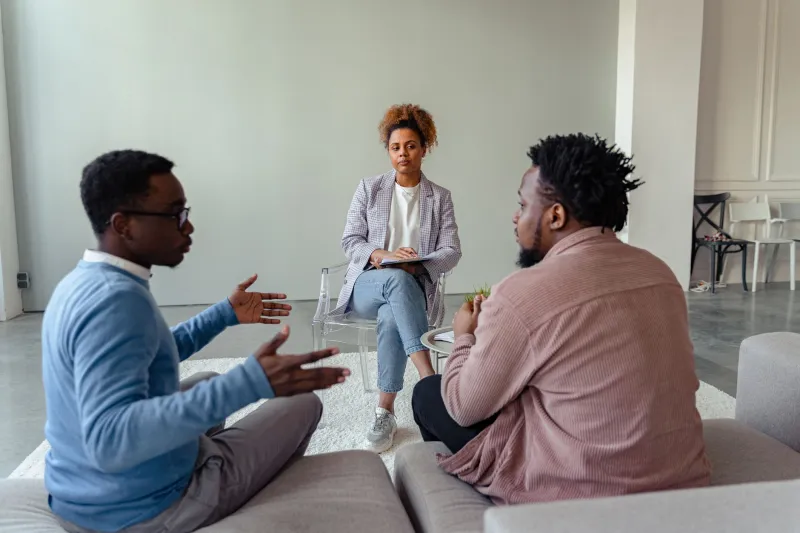
Family mediation is, at its core, a structured negotiation facilitated by a neutral third party. Unlike litigation, in which a judge imposes a binding decision, mediation invites the disputing parties to construct their own agreements — guided, but not governed, by the mediator's expertise. The process is typically confidential, voluntary, and far less expensive than protracted court proceedings.
The distinction matters enormously in practice. When a judge rules on a custody arrangement, one party frequently leaves the courtroom feeling defeated, resentful, and inclined to relitigate. When two parents arrive at a parenting plan through dialogue and mutual concession, research consistently shows they are more likely to honor its terms and adapt cooperatively when circumstances change.
According to a 2022 report from the Association for Conflict Resolution, mediated family agreements are adhered to at significantly higher rates than court-ordered ones — not because they are legally superior, but because the people bound by them helped write them.
"Ownership is everything," says Dr. Marcus Webb, a family mediator and professor of conflict studies at a university in the Pacific Northwest. "When people feel heard and respected during the process, the outcome carries a different kind of legitimacy. It's theirs."
Mirrors of International Peacebuilding
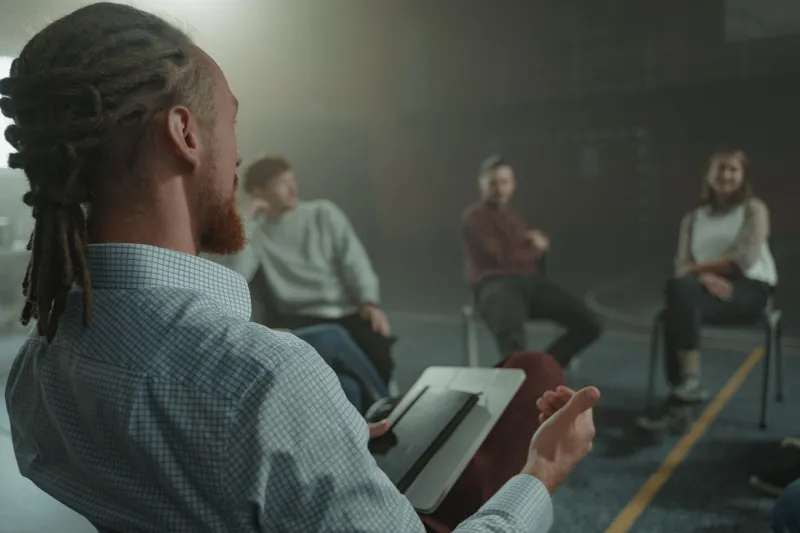
To those familiar with the principles of international diplomacy and post-conflict reconciliation, the parallels are striking. The same foundational tools that mediators deploy in divorce proceedings — active listening, interest-based negotiation, acknowledgment of grievance, and the construction of forward-looking agreements — are the cornerstones of peace processes from Northern Ireland to post-apartheid South Africa.
In both contexts, the goal is not merely to stop the immediate hostility but to create conditions in which former adversaries can coexist, cooperate, and, where children are involved, parent together across a lifetime. A custody agreement, in this light, is not unlike a ceasefire protocol: it requires both parties to see past their immediate grievances toward a shared future they cannot avoid.
"We sometimes think of peace as something that happens between nations," says Renata Flores, a certified mediator and trainer based in Chicago who has worked with both community organizations and family court systems. "But the skills are identical. You are asking people who are in pain, who feel wronged, to imagine a relationship that doesn't destroy them or the people they love. That is peacebuilding. Full stop."
The Children in the Room
Perhaps no argument in favor of family mediation is more compelling than the one made on behalf of children. Decades of research in developmental psychology confirm that parental conflict — particularly when it is prolonged, visible, and adversarial — inflicts measurable harm on children's emotional and cognitive development. The courtroom, by design, is an adversarial arena. It sharpens grievances, rewards combative strategy, and rarely creates the conditions for the kind of dignified co-parenting that children need.
Mediation, by contrast, models something different. When children observe — or are later told — that their parents chose dialogue over combat, the lesson is not merely practical. It is formative.
"Kids internalize the way their parents handle conflict," says Dr. Lydia Choi, a child psychologist who frequently collaborates with family mediators in the greater Atlanta area. "If they grow up watching their parents weaponize the legal system against each other, that becomes their template for how adults deal with disagreement. If they grow up knowing their parents sat in a room and worked it out, that's a different inheritance entirely."
Expanding the Circle: Inheritance, Elder Care, and Family Business
While divorce and custody cases represent the most visible domain of family mediation, practitioners are increasingly being called upon to address a broader range of household conflicts. Disputes over inheritance and estate distribution — which family court judges routinely describe as among the most bitter they encounter — are proving especially amenable to mediated resolution. So too are conflicts surrounding elder care decisions, the division of family-owned businesses, and intergenerational property disagreements.
In each of these cases, the underlying dynamic is the same: relationships that will persist long after any legal ruling require a process that honors their complexity. A probate court can distribute assets; it cannot preserve a sibling relationship. Only the siblings themselves can do that — and mediation, at its best, gives them the space and structure to try.
Barriers to Access and the Equity Question
For all its promise, family mediation is not yet universally accessible. Cost remains a barrier for lower-income families, many of whom rely on public defenders and court-appointed processes that do not routinely incorporate mediation. Geographic disparities persist as well: rural communities frequently lack access to trained practitioners, while urban centers — particularly those serving immigrant populations — face shortages of culturally and linguistically competent mediators.
Advocates argue that addressing these gaps is not merely a matter of professional development but of social justice. If mediation consistently produces better outcomes — for families, for children, for communities — then restricting access to those who can afford private practitioners amounts to a two-tiered system of conflict resolution that disadvantages the most vulnerable.
Several states, including California and Texas, have moved to integrate mediation more formally into family court systems, offering subsidized sessions for qualifying families. Nonprofit organizations in cities like Detroit, Philadelphia, and Denver are training community members in basic mediation skills, extending the reach of the discipline into neighborhoods where formal practitioners are scarce.
A Practice That Points Toward Something Larger
There is a broader argument embedded in the growth of family mediation — one that practitioners and advocates are increasingly willing to make explicitly. If Americans can learn to resolve the most intimate and emotionally loaded conflicts of their lives through dialogue rather than combat, the habits of mind that practice cultivates do not stay confined to the family home.
People who have experienced mediation firsthand report changes in how they approach disagreement in other areas of life: at work, in their neighborhoods, in their civic participation. They describe a shift from a zero-sum orientation — in which someone must win and someone must lose — toward a more collaborative instinct that asks, first, what the other person actually needs.
In a national climate defined by polarization, that shift is not trivial. It is, arguably, the precondition for almost every other form of reconciliation the country needs.
"We talk about healing the country as if it's this enormous, abstract project," Renata Flores says. "But it starts in the specific. It starts in the room. It starts with two people who are furious at each other deciding — choosing — to listen instead of fight. That's where peace always begins."