Justice Beyond the Courthouse: How Rural America Is Building Its Own Path to Peace
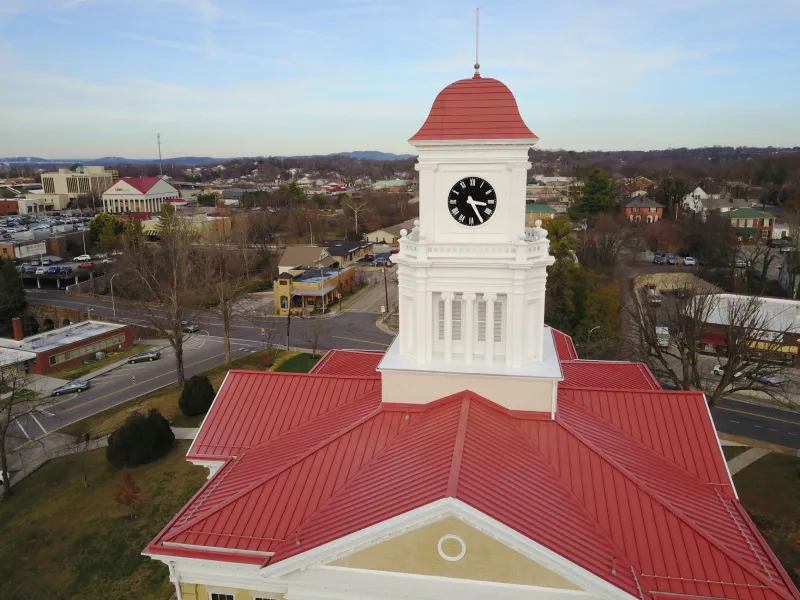
In Harlan County, Kentucky, the nearest functioning civil courthouse is a forty-minute drive on roads that ice over half the winter. For a single mother disputing a landlord's refusal to return her security deposit, that distance might as well be a continent. The filing fees alone could exceed what she's owed. The wait for a hearing date — months, sometimes longer. And the prospect of navigating legal procedures without an attorney, in a county where the last legal aid office closed years ago, is enough to make most people simply give up.
This is not an isolated story. It is the quiet, grinding reality of justice in rural America.
Yet something is changing. Across small towns from eastern Tennessee to western Nebraska, a generation of community mediators — many of them neighbors, farmers, retired teachers, and faith leaders — is constructing an alternative architecture of accountability. Modest in its ambitions, perhaps, but transformative in its effects.
The Geography of Legal Abandonment
The term "legal desert" was coined by legal scholars to describe regions where residents have virtually no practical access to civil legal services. By most measures, rural America is the largest legal desert in the country.
According to the Legal Services Corporation, roughly 1.3 million low-income Americans in rural areas face at least one civil legal problem each year with no meaningful access to professional legal help. Court consolidations — driven by budget cuts and declining rural populations — have shuttered local courthouses across dozens of states over the past two decades. In their absence, disputes that might once have been resolved in weeks now fester for years, corroding relationships, livelihoods, and communities from within.
The consequences extend well beyond individual hardship. Unresolved disputes over land boundaries, water rights, estate inheritances, and agricultural contracts can fracture families and destabilize the small-scale social compacts that hold rural communities together. When formal justice fails to show up, informal justice — the kind that runs on resentment and rumor — tends to fill the space.
Homegrown Solutions, Human Scale
The community mediation movement has existed in various forms since the 1970s, but its rural iteration is younger, scrappier, and in many ways more urgently needed. Unlike urban mediation centers, which often operate within arm's reach of the court system and bar associations, rural mediation programs frequently function as the only conflict resolution infrastructure available for hundreds of square miles.
Take the High Plains Dispute Resolution Center, a volunteer-driven organization operating across a cluster of counties in western Kansas. Founded by a retired county extension agent who had watched neighbor-versus-neighbor conflicts over water rights destroy friendships and farming partnerships across a generation, the center now handles dozens of cases per year — everything from fence-line disagreements and livestock trespass to family business succession disputes and landlord-tenant conflicts.
What makes it work, its organizers say, is not procedural sophistication but cultural fluency. The mediators know the land. They know the rhythms of agricultural life, the pride that attaches to property, and the particular way that pride can calcify into grievance when someone feels they haven't been heard. They speak the same language as the people they serve — literally and figuratively.
"People here don't come to a process they don't trust," says one of the center's lead mediators, a former county commissioner who has lived in the region his entire life. "And they don't trust what they don't recognize. When they see someone who understands what it means to lose a crop, or to have your family name attached to a piece of ground for four generations, the conversation changes."
Speed, Cost, and Dignity
The practical advantages of community mediation over formal litigation are well-documented, but in rural contexts they become especially pronounced. Cases that might take eighteen months to resolve in an overburdened court system are frequently settled in one or two mediation sessions. Costs, even for programs that charge modest sliding-scale fees, are a fraction of legal representation. And because mediation is voluntary and confidential, participants retain a degree of agency and dignity that adversarial proceedings rarely afford.
Perhaps most importantly, mediated agreements tend to hold. Research consistently shows that parties who reach their own negotiated settlements are more likely to comply with the terms than those subject to court-imposed judgments. In tight-knit rural communities, where the person across the table is also the person you'll see at the grain elevator next Tuesday, that durability matters enormously.
In Appalachian Virginia, the New River Valley Mediation Program has built a reputation for handling precisely the kinds of disputes — estate conflicts, boundary disagreements, small business partnerships gone sour — that can otherwise poison family relationships across generations. Program coordinator Linda Morefield, who has trained mediators across a five-county region, describes her work as fundamentally relational rather than legal.
"We're not trying to determine who's right," she explains. "We're trying to help people find a way forward that they can both live with. That's a different question entirely, and it's one that courts are actually not very well designed to answer."
Training the Next Generation of Rural Peacemakers
Sustaining these programs requires more than goodwill. It requires trained mediators, and in rural areas, the pipeline is not always obvious. Many centers have responded by developing their own training curricula, often in partnership with community colleges, extension services, and local bar associations. The goal is to build a bench of skilled practitioners who are rooted in the community and committed to staying there.
Some programs have taken a deliberately intergenerational approach, recruiting younger residents — agricultural students, community college graduates, young professionals — alongside retired elders whose community standing lends the process credibility. The combination, practitioners report, creates mediation teams that can bridge generational as well as interpersonal divides.
State-level policy has begun, slowly, to catch up. Several states have passed legislation enabling courts to formally refer civil cases to community mediation centers, creating a modest but meaningful institutional bridge between the formal and informal systems. Advocates argue that more robust public funding — rather than the patchwork of grants and local donations that most rural centers rely upon — would dramatically expand reach and capacity.
The Overlooked Frontier
The national conversation about access to justice tends to center on urban communities — and understandably so, given the scale and visibility of urban legal crises. But the rural justice gap represents a distinct and deeply rooted failure, one that cannot be addressed simply by extending urban solutions outward.
What rural communities are building — quietly, with limited resources and enormous ingenuity — is something the formal system has rarely managed to produce: a justice infrastructure that is genuinely of the people, responsive to local culture, and oriented toward healing rather than merely adjudicating. It is peacebuilding in the most literal sense, constructed not in conference rooms or legislative chambers but in church basements, extension offices, and the living rooms of people who have decided that their neighbors deserve better than a system that has largely forgotten them.
The gavel may have fallen silent in too many rural courthouses. But in its place, something more durable may be taking root — a form of civic repair built on listening, on trust, and on the stubborn conviction that even the most entrenched conflict can find its way toward resolution.
That conviction, it turns out, may be rural America's most underappreciated export.