Beyond Punishment: How Restorative Justice Is Quietly Rewriting the Rules of Accountability in American Courts
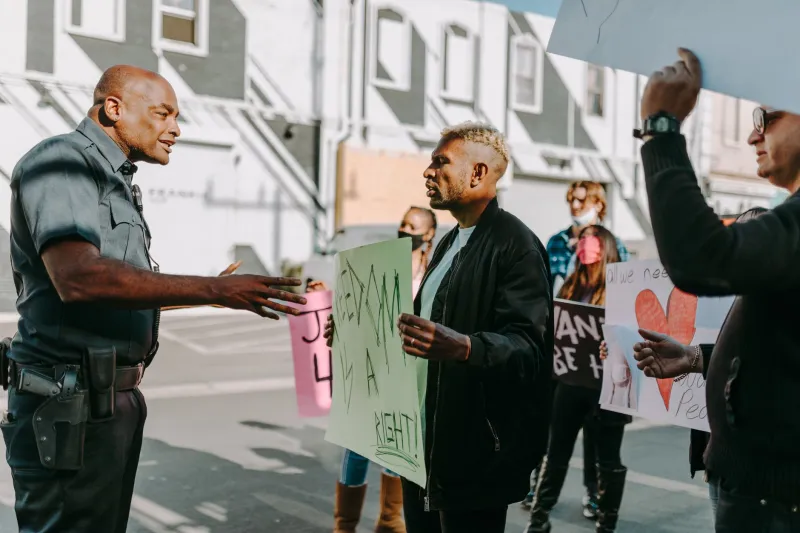
For most of American history, the question at the center of every criminal proceeding has been a deceptively simple one: What does this person deserve to suffer? Sentencing guidelines, mandatory minimums, and prosecutorial discretion have all been calibrated around that single axis — punishment as the primary currency of justice. But in a growing number of courtrooms, community centers, and correctional facilities across the country, a different question is gaining traction: What does it take to actually repair the harm?
That shift in framing, modest as it may sound, is at the heart of a quiet but consequential transformation in how Americans are approaching crime, accountability, and the possibility of healing.
A Different Kind of Reckoning
Restorative justice is not a new idea. Its roots stretch back centuries through Indigenous traditions, religious communities, and early conflict resolution movements. But its application within formal American legal systems has accelerated dramatically over the past two decades, and nowhere more visibly than in cities wrestling with the compounded crises of mass incarceration, community distrust, and cycles of reoffending that conventional punishment has consistently failed to interrupt.
In Baltimore, the Community Conferencing Center has facilitated thousands of restorative dialogues involving young people who have committed offenses ranging from theft to assault. Rather than routing these cases immediately into the adversarial machinery of the court system, trained facilitators bring together the person who caused harm, the person who was harmed, and members of the surrounding community in a structured circle. The goal is not to excuse what happened — it is to confront it with a depth and directness that a plea deal or sentencing hearing rarely allows.
"The courtroom is designed for argument," one Baltimore facilitator explained in a community forum. "Restorative circles are designed for truth."
The outcomes have been notable. Participants in Baltimore's conferencing programs have shown significantly lower rates of re-arrest compared to peers processed through standard juvenile court procedures. More striking still, surveys consistently show that victims who participate in restorative processes report higher levels of satisfaction with the outcome than those whose cases are resolved through traditional prosecution — even when traditional prosecution results in conviction.
Denver's Evolving Model
Denver has emerged as one of the more ambitious laboratories for restorative justice at the municipal level. The city's Restorative Justice Program, operating in partnership with local schools, the district attorney's office, and community organizations, has expanded well beyond juvenile cases to address a broad range of offenses involving adult defendants.
What distinguishes Denver's approach is its deliberate integration with prosecutorial decision-making. Rather than treating restorative processes as a diversion track reserved for low-level offenses, the city has worked to embed restorative options into the conversation at earlier stages of case review. Prosecutors are encouraged — though not required — to consider whether a restorative process might better serve the needs of the victim, the community, and the long-term interests of public safety.
Critics have raised legitimate concerns about consistency and equity. Who gets offered a restorative pathway, and who does not? Does access to these programs reflect — or inadvertently reinforce — existing racial and socioeconomic disparities in how the justice system treats defendants? These are not hypothetical worries. Research has documented troubling patterns in which restorative diversion is more readily extended to white defendants and those with greater social capital, even in programs explicitly designed to be equitable.
Advocates in Denver have responded to this critique not by defending the status quo but by using it as a design challenge — building in explicit equity audits, diversifying the facilitator pool, and working to ensure that community members most affected by both crime and over-policing have meaningful voices in how programs are structured and evaluated.
Oakland and the Community Circle
In Oakland, restorative justice has taken on a distinctly grassroots character. Shaped by decades of activism around police violence, racial justice, and the disproportionate impact of incarceration on Black and Latino communities, Oakland's restorative ecosystem has grown organically through schools, faith communities, and neighborhood organizations — often preceding and informing formal institutional adoption rather than flowing from it.
The East Oakland-based organization Restorative Justice for Oakland Youth (RJOY) has been particularly influential, not only in reducing school suspensions through restorative discipline practices but in demonstrating that the philosophy can scale. What began as an intervention in school hallways has become a model studied by policymakers and practitioners across the country.
For Oakland's advocates, the stakes of this work are inseparable from the broader struggle for racial equity. "When we talk about restorative justice," one RJOY facilitator has noted, "we are also talking about who gets to be seen as fully human in this system — whose harm matters, whose story gets told, and who gets a chance to make things right."
What the Evidence Actually Shows
The empirical case for restorative justice has grown considerably more robust over the past decade. A landmark synthesis of studies conducted by criminologist Lawrence Sherman and colleagues at Cambridge University found that restorative justice conferencing reduced reoffending more effectively than conventional criminal justice processing across a range of offense types and demographic groups. Victim satisfaction rates in restorative processes consistently outpaced those in traditional proceedings. Post-traumatic stress symptoms among victims who participated in face-to-face dialogue were measurably lower than among those who did not.
None of this suggests that restorative justice is a universal solution or that incarceration is never appropriate. Serious violent offenses, cases involving ongoing danger, and situations where victims have no wish to engage all present genuine limitations. Responsible advocates are careful to acknowledge these boundaries.
But the evidence does challenge a foundational assumption of the American justice system — the idea that punishment and accountability are synonymous. They are not. A person can be punished extensively without ever genuinely confronting the reality of the harm they caused. And a person can be held profoundly accountable — required to face their victim, listen to the full weight of what they did, make concrete commitments to repair — without a single day of incarceration.
The Deeper Question
At its core, the restorative justice movement asks Americans to hold a more complicated picture of what justice actually requires. It asks us to take seriously the needs of victims, not merely as witnesses in a state prosecution but as people whose healing matters in its own right. It asks us to consider whether communities fractured by crime are better served by removing individuals to distant prisons or by requiring those individuals to remain present, accountable, and engaged in the work of repair. And it asks us to reckon honestly with a punitive system that has, by most measures, failed to deliver on its central promise of public safety.
None of these are comfortable questions. They ask something difficult of victims, of offenders, of communities, and of a society long accustomed to measuring justice by the severity of its consequences rather than the depth of its repair.
But across Baltimore, Denver, Oakland, and dozens of other communities quietly doing this work, something is being demonstrated that no policy memo or sentencing reform can fully capture: that when human beings are given the conditions to speak honestly, listen deeply, and take genuine responsibility, something becomes possible that punishment alone has never been able to produce.
They call it justice. It might also be called peace.