When Words Run Out: The Quiet Practices That Heal Relationships Dialogue Cannot Reach
Photo: Éamonn Ó Muirí, CC BY 2.0, via Wikimedia Commons
The Tyranny of the Difficult Conversation
American culture has developed a robust vocabulary for conflict resolution. We speak of having "the talk," of clearing the air, of saying what needs to be said. Self-help shelves overflow with guides to difficult conversations, nonviolent communication, and the art of the apology. The implicit assumption running through nearly all of it is that the path to reconciliation is fundamentally verbal—that healing is something we speak our way into.
For many people, that assumption holds. Language is powerful. The right words, offered sincerely and received generously, can dissolve years of accumulated grievance. But for many others—and for entire communities shaped by trauma, cultural difference, or the particular kind of damage that words themselves have caused—the demand for articulate dialogue can feel less like an invitation and more like a test they are destined to fail.
What happens when someone lacks the emotional vocabulary to name what went wrong? When the wound is so deep that speaking about it reopens rather than relieves it? When the relationship's history is so tangled that any attempt at direct conversation immediately collapses into re-litigation of old arguments? In these situations, the insistence on talking it out can become its own obstacle—a prerequisite that prevents people from accessing the repair they genuinely need.
The Body Remembers What the Mind Won't Say
Research in trauma psychology has long established that the body holds relational experience in ways that verbal processing alone cannot fully reach. The somatic residue of a serious rupture—the tension that arrives when a certain person's name is mentioned, the shallow breathing that precedes a difficult encounter, the way the stomach tightens at a familiar address—does not dissolve simply because the mind has constructed a coherent narrative about what happened.
This is why practitioners working at the intersection of conflict resolution and trauma-informed care have increasingly turned their attention to embodied, non-verbal approaches to reconciliation. Not as replacements for dialogue, but as pathways that can make dialogue possible—or that can accomplish what dialogue cannot.
The logic is intuitive once you encounter it: if conflict is experienced in the body, and if the body responds to action and presence in ways that the rational mind does not fully control, then shared physical experience—working alongside someone, eating with them, making something together—can shift the relational field in ways that talking about the conflict cannot.
Shared Tables, Shared Ground
Consider the meal. In virtually every culture on earth, the shared table carries ceremonial weight as a site of reconciliation. This is not coincidence. Eating together is an act of mutual vulnerability—we lower our defenses, we engage our senses, we slow down. The rhythm of passing food, of tending to one another's hunger, of sitting in close proximity without the pressure of performing emotional fluency, creates conditions in which relationship can quietly reconstitute itself.
Across the United States, organizations working with estranged families, divided communities, and post-conflict groups have formalized this intuition into structured programs. The Family Dinner Project, based in Massachusetts, has documented how regular shared meals—even among families in significant distress—correlate with measurably improved communication and reduced conflict over time. The meals themselves are not therapy. They do not require anyone to process anything. They simply require showing up and sitting down together, which turns out to be no small thing.
In communities fractured by racial tension or historical grievance, interfaith and intercultural dinner programs have created space for relationship-building that precedes—and often enables—harder conversations about justice and accountability. When people have broken bread together, the stranger becomes someone whose comfort you have attended to. That shift in perception does not resolve structural injustice, but it creates the relational foundation without which structural conversations rarely go anywhere productive.
Making Peace by Making Things
Collaborative creative work offers another pathway. When two people who cannot currently speak to one another without escalating are asked to build something together—a mural, a garden bed, a meal, a piece of music—the focus of attention shifts from the relationship and its injuries to the shared task. The task creates a third point in the triangle, something external to both parties that requires their cooperation and absorbs their competitive energy.
This is not avoidance. Done thoughtfully, collaborative work can be one of the most honest forms of relational encounter available. It reveals how people make decisions under pressure, how they handle disagreement in real time, how they respond when someone else's approach differs from their own. It creates genuine shared history—not the history of the original wound, but a new history of having made something together—which can itself become a resource for future repair.
Community muralism projects in cities from Philadelphia to Los Angeles have long operated on this understanding, bringing together residents divided by neighborhood conflict, gang affiliation, or racial tension to create public art that requires sustained cooperation. The process is rarely smooth. Disagreements emerge about imagery, color, representation, and credit. But those disagreements, occurring in the context of a shared creative project with a visible endpoint, are often more navigable than the same disagreements occurring in the context of a formal mediation session.
Presence as Practice
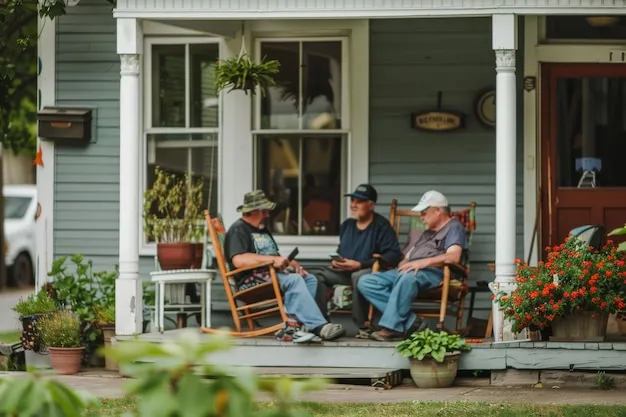
Perhaps the most undervalued form of non-verbal reconciliation is the simplest: consistent, patient presence. Not presence that demands acknowledgment or reciprocity, but the kind of steady showing-up that communicates, without words, that the relationship has not been abandoned.
This might look like continuing to attend the same family gathering even when things are strained. It might look like a neighbor who keeps waving hello through months of cold silence following a dispute. It might look like a colleague who continues to offer small professional courtesies—forwarding a relevant article, acknowledging a work accomplishment—despite an unresolved personal tension.
These gestures do not fix anything, and they should not be mistaken for resolution. But they preserve the possibility of resolution by refusing to let the relationship calcify entirely. They communicate something that is genuinely difficult to say aloud: I have not written you off. The door is still open, even if I cannot walk through it right now.
Toward a More Expansive Peacebuilding
None of this is an argument against dialogue. Conversation, when it is genuinely possible, remains one of the most powerful tools of reconciliation available to human beings. The goal is not to replace it but to expand what we understand peacebuilding to include—to make room for the people and communities for whom the talking cure is not, at this moment, a cure at all.
A more expansive peacebuilding recognizes that repair takes many forms, that the path to restored relationship is not always straight or verbal, and that sometimes the most profound thing two people can do for a fractured bond is simply to make dinner, plant something in the ground, or sit quietly in the same room until the silence stops feeling like an accusation.
Peace, it turns out, is sometimes less spoken than lived.