Algorithms of Agreement: Can Artificial Intelligence Become a Genuine Force for Everyday Peacebuilding?
Conflict is one of the most stubbornly human experiences imaginable. It arrives uninvited — in shared apartments, open-plan offices, family group chats, and neighborhood association meetings — and it rarely submits to tidy, logical resolution. Yet a new generation of software developers is betting that artificial intelligence can do what centuries of human ingenuity have only partially achieved: make conflict easier, faster, and less painful to resolve.
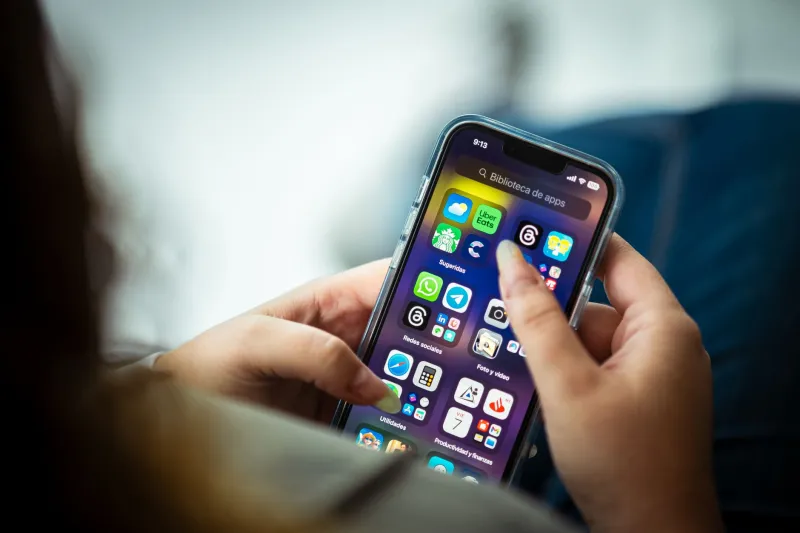
The market for AI-assisted conflict resolution tools has expanded considerably over the past three years. Applications with names like Impartial, ResolveAI, and ClearAir promise users guided frameworks for articulating grievances, identifying shared interests, and drafting agreements — all from the convenience of a smartphone. Some platforms deploy large language models to simulate a neutral third party. Others use structured prompts to walk disputants through interest-based negotiation sequences borrowed directly from the academic literature on mediation. A few have even begun integrating voice analysis, claiming to detect emotional escalation before it derails a conversation.
The pitch is seductive, particularly in a country where professional mediation services remain inaccessible to millions of Americans who cannot afford them, do not know they exist, or live in communities where such services are simply unavailable.
A Solution to an Access Problem
To understand why these tools are gaining traction, it helps to appreciate the scale of unmet need they are attempting to address. According to estimates from the American Bar Association, the vast majority of civil disputes in the United States — including landlord-tenant conflicts, consumer complaints, and minor workplace grievances — never receive any form of structured resolution. They fester, escalate, or simply rupture relationships that might otherwise have been repaired.
"Most people don't call a mediator when they're fighting with their roommate over dishes," says one conflict resolution educator who trains community mediators in the Pacific Northwest. "They stew, they avoid, or they blow up. If an app can interrupt that cycle and give someone a structured way to express what they actually need, that's not nothing."
Developers of these platforms are quick to emphasize the access argument. One founder of a workplace conflict tool, built for small businesses that cannot afford HR departments or professional mediation services, frames her product explicitly as a democratizing instrument. "We're not trying to replace human mediators," she explains. "We're trying to reach the 90 percent of conflicts that never get to a human mediator in the first place."
That framing resonates with the broader mission of organizations committed to making peacebuilding resources universally available. If technology can lower the barrier to constructive conflict engagement, the potential social dividend is significant.
Where the Algorithm Meets Its Limits
Professional mediators, however, are not uniformly enthusiastic — and their reservations deserve serious attention rather than dismissal as mere professional protectionism.
The central concern is not that AI tools are unhelpful but that they may be helpful in ways that inadvertently undermine the deeper goals of conflict resolution. Mediation, at its most transformative, is not merely a transaction in which two parties exchange concessions until they reach a number both can live with. It is a relational process — one in which disputants are invited to genuinely hear one another, to recognize the humanity behind a grievance, and sometimes to experience a shift in how they understand both the conflict and themselves.
"What I do in a room with two people is not primarily about getting to an agreement," says a seasoned family mediator based in Chicago with more than two decades of practice. "It's about creating the conditions under which two human beings can actually listen to each other. I don't know how you replicate that with a chatbot."
Her concern points to a structural limitation that even the most sophisticated language model cannot fully overcome: the absence of genuine relational presence. An AI system can identify patterns in language, suggest reframes, and guide a user through a structured process. It cannot notice that someone's voice tightened when a particular subject arose. It cannot choose, in the way a skilled human mediator might, to sit with silence rather than fill it. It cannot hold the emotional weight of a room.
There is also the question of whose values are embedded in these systems. Every AI tool encodes assumptions — about what counts as a fair outcome, what communication style is considered productive, and which kinds of conflict are amenable to structured resolution. Those assumptions are not neutral. They reflect the perspectives of the engineers, product designers, and investors who built the platform. In a society as diverse as the United States, where conflict is often inseparable from histories of racial inequity, economic marginalization, and cultural difference, that is a significant concern.
Designing for Justice, Not Just Efficiency
The most thoughtful voices in this conversation are not asking whether AI conflict resolution tools should exist. They are asking what values must govern their design if they are to serve justice as well as convenience.
Several principles emerge from conversations with mediators, technologists, and community peacebuilders.
First, transparency. Users of AI-assisted conflict tools deserve to understand the frameworks and assumptions embedded in the system they are using. A platform that draws on interest-based negotiation principles should say so — and should acknowledge that this approach, while powerful, is not the only legitimate way to understand or address conflict.
Second, cultural humility. Conflict resolution norms vary enormously across cultural communities. A tool designed primarily for white-collar, English-speaking, individualistic communication contexts will not serve all Americans equally. Developers have an obligation to build with diverse communities, not merely for them.
Third, clear scope. AI tools should be transparent about the kinds of conflicts they are and are not suited to address. Disputes involving domestic violence, significant power imbalances, or deeply traumatic histories require human expertise and, often, human compassion. No responsible platform should position itself as a substitute for those resources.
Finally, accountability. When an AI-assisted process produces an outcome that one party later experiences as unjust or coerced, who bears responsibility? The answer to that question must be established before, not after, these tools are widely adopted.
A Tool in Service of Something Larger
The history of peacebuilding is, in part, a history of expanding the circle of people who have access to its methods and principles. Community mediation centers, restorative justice programs in public schools, and peer conflict resolution training in low-income neighborhoods have all, at their best, carried the conviction that the capacity for constructive conflict engagement is not a luxury reserved for those who can afford professional services. It belongs to everyone.
AI-powered conflict resolution tools, designed with integrity and governed by genuine commitments to equity and human dignity, could extend that circle further still. They could reach the college student who doesn't know how to approach a conflict with a professor, the small business owner navigating a dispute with a supplier, the family member who needs help finding words for a conversation that has been avoided for years.
But technology is never neutral, and convenience is not the same as justice. The measure of these tools will not be how quickly they produce agreements. It will be whether they make people more capable of genuine understanding — more willing, after the app is closed, to see the person on the other side of a conflict as fully human.
That, ultimately, is what peacebuilding has always been about. The question is whether an algorithm can be taught to serve it.