Shared Mission, Former Enemies: The Organizations Where Adversaries Are Becoming Allies
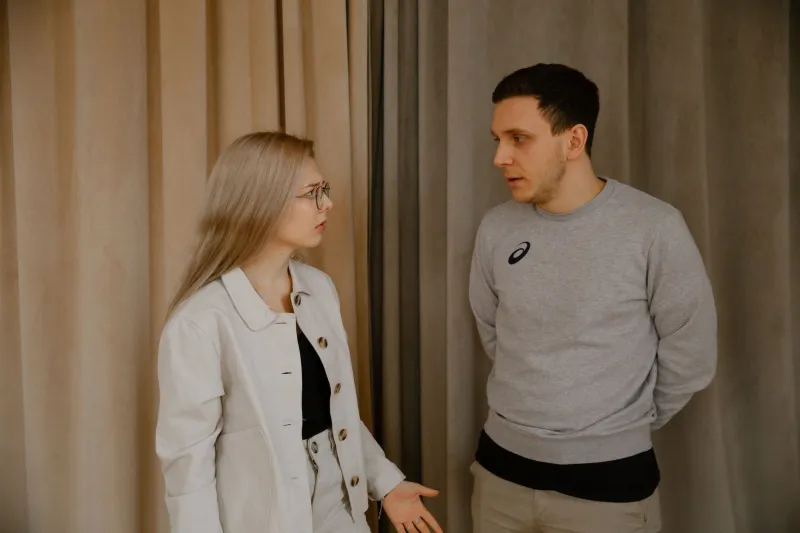
For years, Gina Raimondo and Marcus Bellfield did not speak the same language — at least not in any way that mattered. Raimondo, a third-generation rancher from eastern Oregon, had spent the better part of a decade fighting federal land management policies she believed were strangling rural livelihoods. Bellfield, a wildlife conservationist based in Portland, had spent roughly the same period advocating for the very regulations she opposed. Their organizations had traded accusations in public hearings, op-ed columns, and, on at least one occasion, a tense standoff at a county commissioner's meeting that made the local evening news.
Today, they co-chair the steering committee of a regional watershed restoration collaborative. They share an office, at least two days a week, and they have produced joint policy recommendations that neither of their former constituencies would have predicted possible.
"I don't want to oversell it," Raimondo said in a recent interview. "We still disagree on things. But I understand now that he wasn't my enemy. He was someone who wanted a different outcome for the same piece of land I love."
This is not a singular story. Across the United States, a quiet but consequential phenomenon is unfolding inside organizations, coalitions, and institutions where former adversaries — environmental, political, ideological — are discovering that shared mission can do what no amount of debate ever managed: build genuine working relationships across lines of deep historical conflict.
The Architecture of Unlikely Alliances
What makes these collaborations possible — and why do so many similar attempts fail? Researchers who study intergroup contact and conflict transformation point to a consistent set of structural conditions that distinguish durable cross-adversary partnerships from short-lived photo opportunities.
First, and perhaps most critically, is the presence of a superordinate goal — a shared objective that neither party can achieve independently. Gordon Allport's foundational contact hypothesis, developed in the 1950s and refined by decades of subsequent research, identified cooperative interdependence as the single most reliable mechanism for reducing intergroup hostility. When people need each other to succeed, the incentive architecture of the relationship changes in fundamental ways.
Second is the role of institutional design. Organizations that successfully integrate former adversaries tend to be deliberate, even systematic, about creating the conditions for relationship-building rather than assuming that proximity alone will produce trust. This includes structured dialogue processes, shared rituals and language, clear norms around conflict within the organization itself, and, critically, visible leadership modeling of cross-adversary respect.
Third is time — a resource that American institutions, under perpetual pressure to demonstrate impact, are often reluctant to invest. Researchers at the Greater Good Science Center at UC Berkeley have documented that meaningful intergroup trust typically requires sustained contact over months or years, not the compressed timelines that grant cycles and organizational metrics tend to reward.
Case Studies in Structural Reconciliation
The Malpai Borderlands Group, a collaborative of ranchers and conservationists in the Arizona-New Mexico borderlands, is perhaps the most-studied example of adversaries-turned-partners in American environmental history. Founded in the early 1990s by a group of ranchers who recognized that their long-term survival depended on ecological health — and conservationists who recognized that working landscapes required working ranchers — the group has managed millions of acres through a governance model built on mutual accountability and genuine shared decision-making.
What distinguishes Malpai from similar efforts that have foundered is its insistence on peer relationships rather than transactional ones. Members are not simply partners on a project; they are, in many cases, friends. Annual gatherings, shared field days, and a culture of genuine curiosity about each other's perspectives have created what group members describe as a "third identity" — neither rancher nor environmentalist, but something that encompasses both.
In the political sphere, organizations like the Bridge Alliance and Braver Angels have spent years developing structured programming that places Americans from opposing partisan traditions in direct, sustained collaborative contact. Braver Angels' "Skills for Bridging the Divide" workshops, now offered in all fifty states, are designed not to produce agreement but to produce something arguably more durable: mutual intelligibility. Participants consistently report that working alongside ideological opponents on concrete shared tasks — community service projects, local issue working groups — fundamentally alters their perception of those opponents as human beings.
When the Work Is the Relationship
One of the more counterintuitive findings from cross-adversary collaboration research is that explicit discussion of the historical conflict between parties is often less transformative than simply working together on something unrelated to that conflict. This is not avoidance — the history is not denied or minimized. But the shared experience of solving a practical problem together creates a relational substrate that makes subsequent discussions of the original conflict more navigable.
"You stop seeing the person across the table as a representative of a position," explained one facilitator who works with politically mixed community development organizations in the Midwest. "You start seeing them as someone who stayed late to finish the grant report and brought coffee for everyone. That's not nothing. That's actually the whole game."
This insight has significant implications for how organizations structure the integration of former adversaries. Diving immediately into the most contentious shared history can re-entrench conflict rather than transform it. Beginning with lower-stakes collaborative tasks — and allowing relationships to develop before the hardest conversations are attempted — appears to produce more durable outcomes.
Lessons for a Divided Nation
The organizations profiled here are not offering a naive prescription for a simple peace. Former adversaries working together experience friction, setbacks, and moments of profound frustration. The journey from opposition to partnership is rarely linear, and it is never painless.
But these collaborations are demonstrating something of enormous importance to a country struggling to imagine its own reconciliation: that the identity categories that define our conflicts are not immutable. That shared purpose can create new identities that transcend old ones. That the person who was your opponent last year can, under the right structural conditions, become someone without whom your most important work could not be done.
The policy implications are substantial. Funders and policymakers who are serious about social cohesion should be investing not merely in dialogue programs but in the creation of durable institutions that give former adversaries genuine shared stakes in shared outcomes. The most powerful peacebuilding infrastructure is not a conference room. It is an organization that cannot function without the people it was designed to bring together.
Gina Raimondo and Marcus Bellfield did not resolve their differences by debating them into submission. They resolved them — partially, imperfectly, and durably — by discovering that the land they had fought over for a decade was something neither of them could protect alone.