Putting Children First: How Child-Centered Divorce Mediation Is Changing the Way American Families Separate
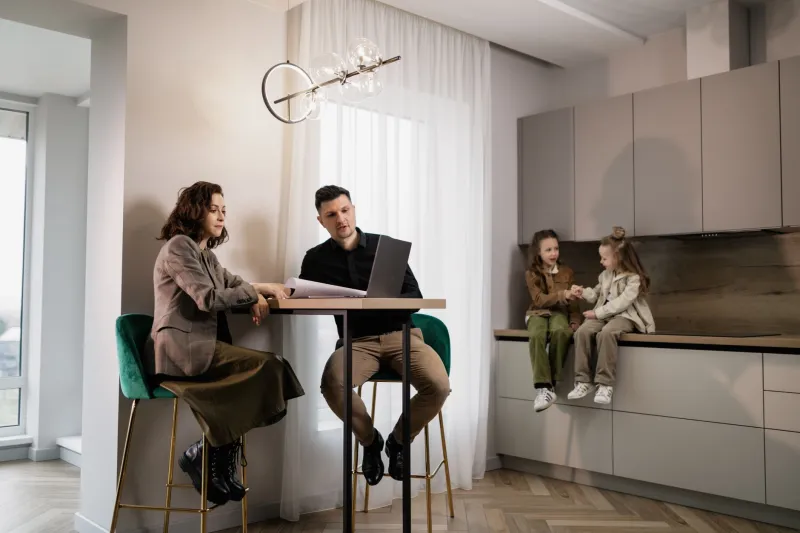
When a marriage ends, the legal system is rarely designed to absorb the emotional wreckage. Courtrooms are adversarial by nature — built to adjudicate disputes, not to heal them. For children caught between two parents locked in litigation, the collateral damage can be profound and lasting. Anxiety, academic decline, behavioral changes, and long-term difficulties forming trusting relationships are among the outcomes researchers have repeatedly documented in children who endure protracted custody battles.
But across the United States, a growing cohort of professionals is working to intercept families before they reach that point. Child-focused divorce mediators and co-parenting specialists are carving out a distinct and increasingly vital role at the intersection of family law and peacebuilding — and the results, both anecdotal and empirical, are difficult to dismiss.
The Problem with Winning
Conventional divorce litigation is structured around a fundamental premise: there are two opposing sides, and one of them will prevail. Attorneys are ethically obligated to advocate zealously for their clients. That framework, however appropriate in many legal contexts, can be deeply counterproductive when the people most affected by the outcome are children who love both of their parents.
"When parents walk into a courtroom, they're already in a war footing," explains one family mediator based in Minneapolis who has worked with separating couples for over a decade. "Everything becomes about winning custody, winning the argument, winning the narrative. The children's actual day-to-day experience gets buried under strategy."
Research consistently supports this concern. A landmark longitudinal study published in the Journal of Family Psychology found that children from high-conflict divorces exhibited significantly elevated stress hormones and poorer social adjustment compared to peers from low-conflict separations — regardless of which parent was awarded primary custody. The conflict itself, not the custody arrangement, was the primary driver of harm.
Family mediators argue that this insight should fundamentally reorient how society approaches divorce. If the goal is children's wellbeing, then reducing conflict must take precedence over determining legal winners.
What Child-Centered Mediation Actually Looks Like
Family mediation is not new. Divorce mediation has existed in various forms since the 1970s, and many states now require at least one mediation session before contested custody cases can proceed to trial. But a newer wave of practitioners is pushing well beyond that baseline, developing specialized approaches that keep children's voices — if not always their literal presence — at the center of every negotiation.
Practitioners trained in models such as Collaborative Divorce, Child-Inclusive Mediation, and Co-Parenting Coaching bring a distinct toolkit to these conversations. Rather than simply facilitating a legal agreement, they help parents examine how proposed arrangements will function at a practical, emotional level: How will school pickups work when parents live forty minutes apart? How will a child's relationship with each parent's extended family be preserved? What happens when one parent wants to relocate?
Child-Inclusive Mediation, in particular, has gained traction in recent years. In this model, a trained child specialist meets separately with the children — not to gather testimony, but to understand their emotional experience and concerns. That specialist then communicates the children's perspective to both parents in a way that is age-appropriate and non-pressuring. Parents frequently report that hearing their children's feelings articulated by a neutral professional shifts the entire tenor of negotiations.
"It's one thing for me to tell a father that his daughter feels scared when her parents argue in front of her," says a child specialist and mediator practicing in Atlanta. "It's another thing entirely when he hears it framed as her experience, not as ammunition from the other side. That's when people start actually listening."
The Research Case for Mediation
The evidence base for mediated settlements is robust and growing. Studies comparing litigated and mediated custody agreements consistently find that mediated agreements produce higher rates of parental compliance, lower rates of relitigation, and — most critically — better long-term outcomes for children on measures including emotional stability, academic performance, and quality of relationship with both parents.
A widely cited study from the University of Virginia tracked families over twelve years following divorce and found that children whose parents reached mediated agreements reported significantly higher levels of closeness with their fathers — the parent most commonly at risk of marginalization in adversarial custody proceedings. The researchers attributed this to the fact that mediated agreements tend to produce more nuanced, flexible parenting plans rather than the blunter "primary" and "secondary" custody designations that litigation often yields.
For peacebuilding advocates, these findings carry a clear message: investing in mediation is not merely a legal reform — it is a public health intervention.
The Access Gap: Who Gets to Mediate?
For all its demonstrated benefits, family mediation in the United States remains stubbornly inaccessible to lower-income families. Private mediators typically charge between $150 and $400 per hour, with comprehensive mediation processes often running into thousands of dollars. For families already stretched thin by the financial disruption of separation, that cost is prohibitive.
The result is a troubling inequity: the families with the fewest resources — and often the highest baseline stress — are the most likely to end up in adversarial litigation, while wealthier families access the gentler, more child-protective alternative.
Advocates are pursuing several strategies to close this gap. Court-connected mediation programs, which exist in many jurisdictions but vary widely in quality and scope, represent one important lever. Organizations including the Association for Conflict Resolution have lobbied for expanded public funding for these programs, arguing that the downstream savings in litigation costs, child welfare services, and educational interventions more than justify the investment.
Legal aid organizations in cities such as Chicago, Denver, and Los Angeles have begun embedding trained mediators directly into family law clinics, offering sliding-scale or pro bono services to families who would otherwise have no access. Community mediation centers — many of them nonprofit and volunteer-staffed — have similarly expanded their family mediation offerings in recent years.
Some advocates are also pushing for mandatory judicial education, arguing that family court judges who understand the research on mediated outcomes will be better positioned to refer families to appropriate services earlier and more consistently.
Building Peace Within Families
The work of family mediation sits at the heart of what peacebuilding looks like at its most intimate scale. Geopolitical conflicts and community divisions command significant public attention — and rightly so. But for millions of American children, the most immediate theater of conflict is not a city council chamber or a protest march. It is the space between their parents.
The professionals working in this space understand that they are not simply drafting parenting plans. They are helping families construct a new architecture for their relationships — one that can endure the inevitable pressures of co-parenting across two households, two sets of rules, and two lives that no longer overlap.
That work is neither simple nor swift. It requires patience, specialized training, and a genuine belief that even people in profound pain are capable of choosing their children's wellbeing over their own grievance. The growing body of practitioners committed to that belief — and the families they serve — offer a quiet but powerful reminder that peace is not only built between nations. It is built, one difficult conversation at a time, in living rooms and mediation offices across this country.